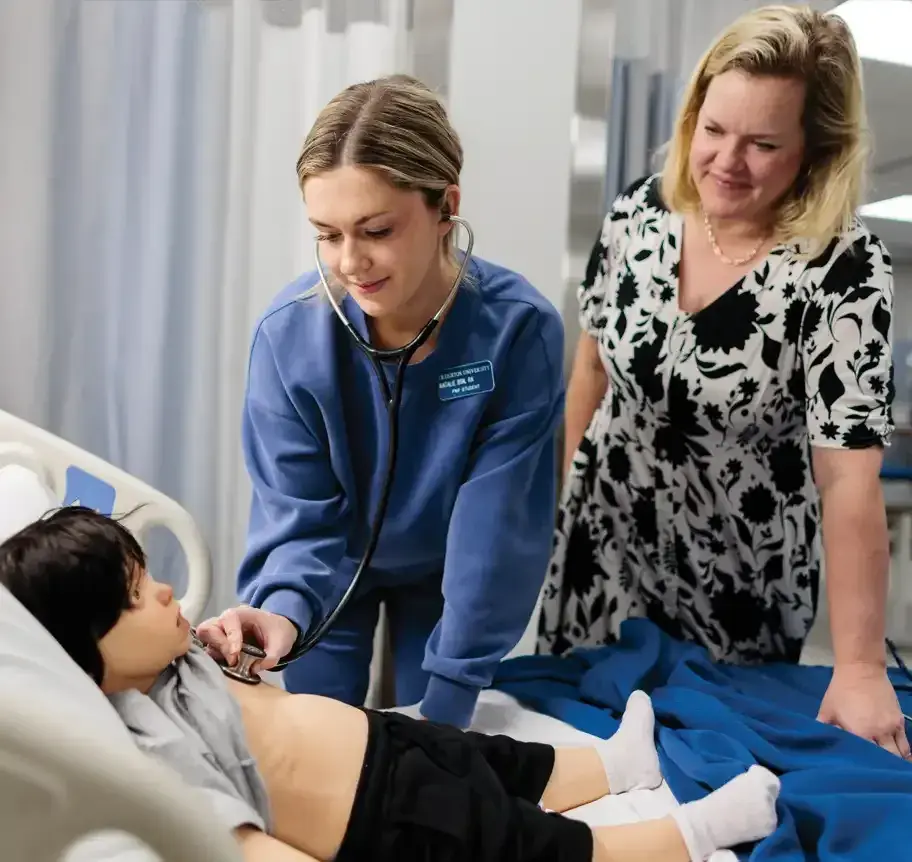
Student in lab setting with instructor.
Online

Doctor of Nursing Practice (DNP)

Prepare to become a nurse practitioner or nursing leader with the online Doctor of Nursing Practice (DNP) degree program at Creighton University. The program offers two tracks: One for those who currently hold a BSN and another for those who have an MSN. No matter their path, Creighton students become life-changing leaders recognized for advancing the quality of care and improving healthcare systems. Benefit from practical, interdisciplinary coursework integrated with compassion-centered, self-reflective Jesuit principles.  The online DNP program is flexible and can be tailored to your own interests and goals. Choose from specializations, including: 

  • Adult-Gerontology Acute-Care NP
  • Family NP
  • Neonatal NP
  • Nursing Administration and Leadership
  • Pediatric Acute and Primary Care NP (dual track)
  • Psychiatric Mental Health Across the Lifespan NP

About the DNP Program

The online DNP program is flexible and can be tailored to your own interests and goals. Choose from specializations including Adult-Gerontology Acute-Care, Family Practice, Neonatal Care, Pediatric Acute and Primary Care (dual track), Psychiatric Mental Health and Nursing Administration and Leadership.

Through personalized coaching and support from dedicated faculty, you will learn how to apply the Jesuit principles of self-reflection to decision-making, ethical reasoning, cultural humanity, advocacy and conflict resolution. Coursework for all tracks and specializations are offered online with the flexibility of part-time and full-time options. Trips to our campus in Omaha, Nebraska, will be required. The number of trips will vary depending on the track you choose. 

Whether you are starting from a BSN or an MSN, through your nurse practitioner program, you'll learn to manage the care of individuals and families in the specialized area of your choosing.

Learn more about each specialization below.

DNP Admission Details

Applicants will need to submit:

  • Application
  • Personal statement
  • Three letters of recommendation, one from supervisor/employer (one Neonatal Nurse Practitioner or Neonatologist is strongly recommended for Neonatal track)
  • Resume or curriculum vitae
  • Official transcripts from all educational institutions attended
  • RN or APRN License—see requirements below

Additional requirements and prerequisites will vary based on the track and level of program:

BSN to DNP

  • Minimum 3.0 cumulative GPA on a 4.0 scale
  • Possess a BSN from an ACEN- or CCNE-accredited college or university
  • Active, unencumbered RN License with Nebraska eligibility
  • Completion of undergraduate statistics course and physical assessment course with C (2.0) or higher
  • Minimum of 2,000 hours of professional nursing work experience (prior to first clinical course).
    • Family NP, Adult-Gerontology Acute Care NP and Nursing Administration and Leadership—minimum 2,000 hours of professional nursing experience in direct patient care
    • Psychiatric Mental Health Across the Lifespan NP—minimum 2,000 hours of direct patient care nursing experience in psychiatrics
    • Neonatal NP—minimum 4,000 hours of direct patient care nursing experience in a level III or level IV NICU
    • Pediatric Primary and Acute Care Nurse Practitioner (Dual Certification)—minimum 2,000 hours direct patient care nursing experience in pediatrics. Only 500 hours of neonatal experience can count toward the required 2,000 pediatric hours.

MSN to DNP

  • Minimum 3.0 cumulative GPA on a 4.0 scale
  • Possess an MSN from an ACEN- or CCNE-accredited college or university
  • Active, unencumbered RN License with Nebraska eligibility for Nursing Administration and Leadership Track
  • Active, unencumbered APRN License with Nebraska eligibility for General Post-Graduate DNP Track
  • Completion of a graduate-level statistics course with C (2.0) or higher

See licensure and state regulatory requirements.

International Transcripts

Due to the specific features and requirements of this program, international students cannot be admitted. Unique situations may be discussed with your admissions advisor.

Any course work taken at an accredited institution outside of the United States must be evaluated course-by-course by a NACES-approved credentialing agency. Visit a list of approved agencies found online. Official evaluations must be sent directly from the agency to Creighton University.

English Language Proficiency Requirement

English language proficiency is an important part of the application process for those whose first language is not English. The College of Nursing has the discretion to determine individual standards for how this requirement will be met using one or more of the following:

  • English Language exam scores. All applicants who have obtained a degree outside of the United States must present a TOEFL score of at least 100, an IELTS score of at least 7 or aDuoLingo score of at least 120. Scores over 2 years old will not be accepted. Students must ask the testing agency to send original scores to Creighton University (Institutional Code 6121).
  • Completion of an undergraduate degree from one of the following countries: Australia, Canada, Barbados, Bahamas, Bermuda, British Virgin Islands, Cayman Islands, Dominica, Grenada, Guam, Ireland, Jamaica, Marshall Islands, New Zealand, St. Kitts, St. Lucia, Scotland, Singapore, Trinidad and Tobago, United Kingdom, United States and Virgin Islands.

The College of Nursing reserves the right to require students to re-take the exam. It is also at the discretion of the College of Nursing as to whether an English Language Proficiency exam is required of applicants who have earned a college degree from a university in the United States or another approved country.

Important Dates and Deadlines

We have several start dates available, so you can begin when it works for you.

  • To start classes in August, apply by May 1.
  • To start classes in January, apply by October 1.
  • To start classes in May, apply by February 1.

If you have any questions about dates, deadlines or application materials, please  contact an admissions advisor for personalized assistance.

What can you do with your DNP degree?

Nurses who earn their DNP degree can pursue a variety of careers, such as:

  • Nurse Practitioner (APRN) roles in your specialty: AG-ACNP, FNP, NNP, PNP (primary/acute), PMHNP—across hospitals, specialty clinics, primary care, NICUs/PICUs, ED/ICU, community health and telehealth
  • Clinical Program Lead: Guide teams, protocols and scope across service lines
  • Manager of Advanced Practice: Oversee provider onboarding, quality, scheduling and regulatory compliance
  • Quality and Safety Leader: Drive evidence-based practice, clinical pathways and outcomes improvement projects
  • Population Health/Care Management Leader: Build chronic disease, transitional care and community-based initiatives
  • Health Systems Leadership roles
  • Academic and Clinical Faculty / Preceptor: Teach in NP programs, simulation labs or lead staff development/CE
  • Specialty-specific leadership

Specialty Areas

Post-Graduate General Track

The general track offers students the option to pursue a non-specialized version of the MSN-DNP. This track prepares current APRN-NPs to expand their knowledge, grow as a nurse leader and achieve this highly respected nursing degree. 

The Post-Graduate General Track can be combined with the Post-Graduate Certificate program for the following specialties:

  • Adult-Gerontology Acute Care Nurse Practitioner—manages the care of individuals in acute care settings.
  • Family Nurse Practitioner—manages care throughout the lifespan of individuals and families.
  • Neonatal Nurse Practitioner—manages care for newborns in all levels of neonatal intensive care units.
  • Pediatric Acute Care Nurse Practitioner—manages the care of pediatric patients across the entire continuum of health from wellness to critical care.
  • Psychiatric Mental Health Across the Lifespan Nurse Practitioner—manages care throughout the lifespan of diverse populations and can practice within both inpatient and outpatient settings.

Nurse Anesthesia (DNP-NA)

Looking to specialize in anesthesia care? Creighton’s Nurse Anesthesia program provides rigorous preparation for future CRNAs.
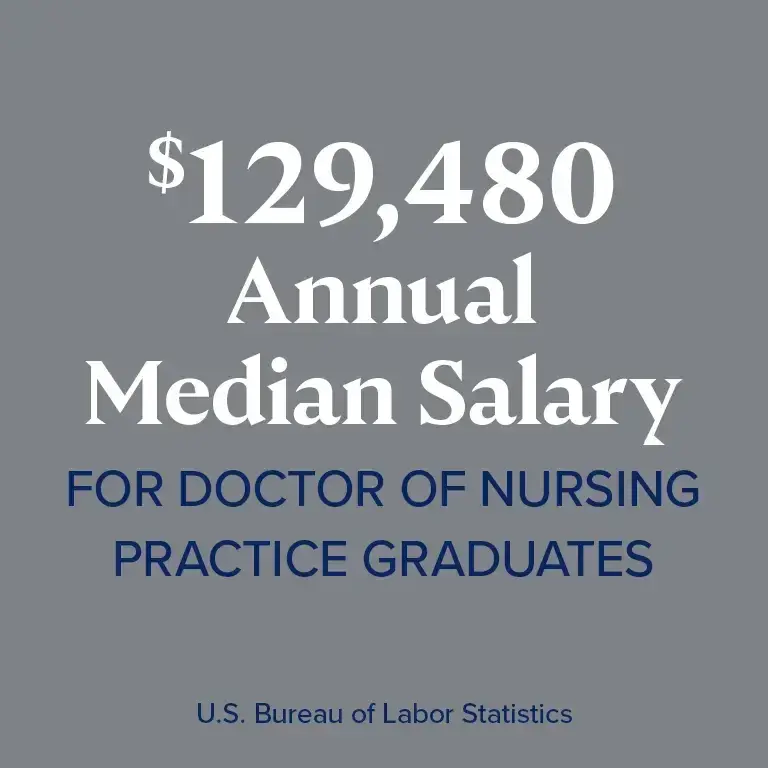
$129,480 annual media salary of doctor of nursing practice graduates
Online part-time or full-time options available
99% nursing practitioner certification rate overall for the last 5 years

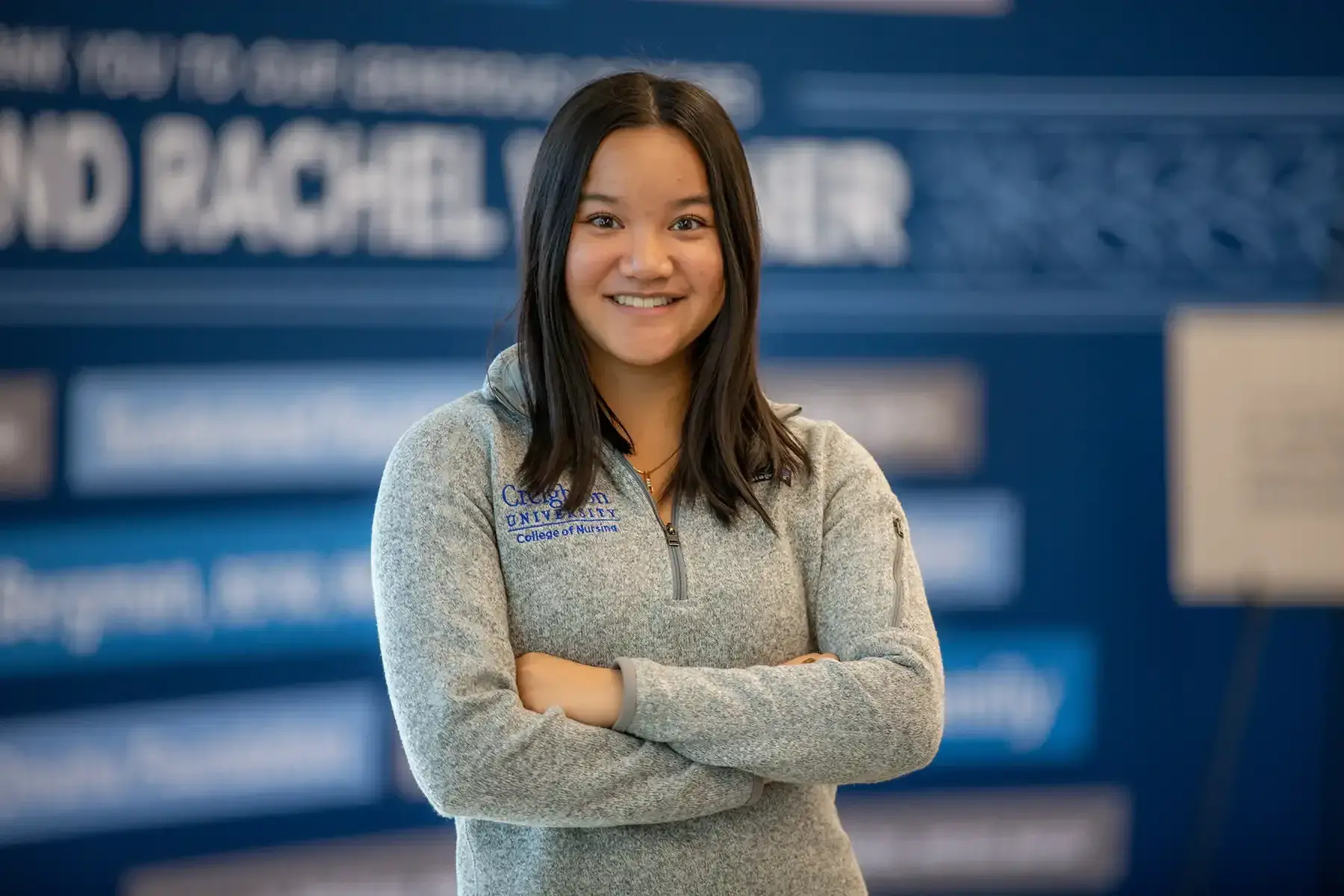
“I loved my Creighton undergrad experience and only applied here for grad school. The nursing faculty is amazing! Both during undergrad and now graduate school, I feel very supported by faculty, and it is such a strong and tight-knit community.”

Alexis Poserio, DNP, Class of 2027

Tuition, Cost and Financial Aid

Tuition is reviewed annually. Visit our Cost and Aid page for current cost information, our net-price calculator and financial-aid information. To help make your graduate studies more affordable, we encourage you to complete and submit the FAFSA

Soto Scholars Program

The Soto Scholars Program is a unique opportunity designed to help nurses become practitioners who are champions of global health. Soto Nursing Scholars receive full scholarship funding, plus a monthly stipend. They complete their DNP degree and a certificate in global health in just three full-time years. While the program is primarily online, scholars will come together for orientation, immersive global experiences and practicum, offering an interprofessional and collaborative approach to global health challenges.

Soto Nursing Scholars begin the program in May each year. The first program cohort of five will begin in May 2026.

Image
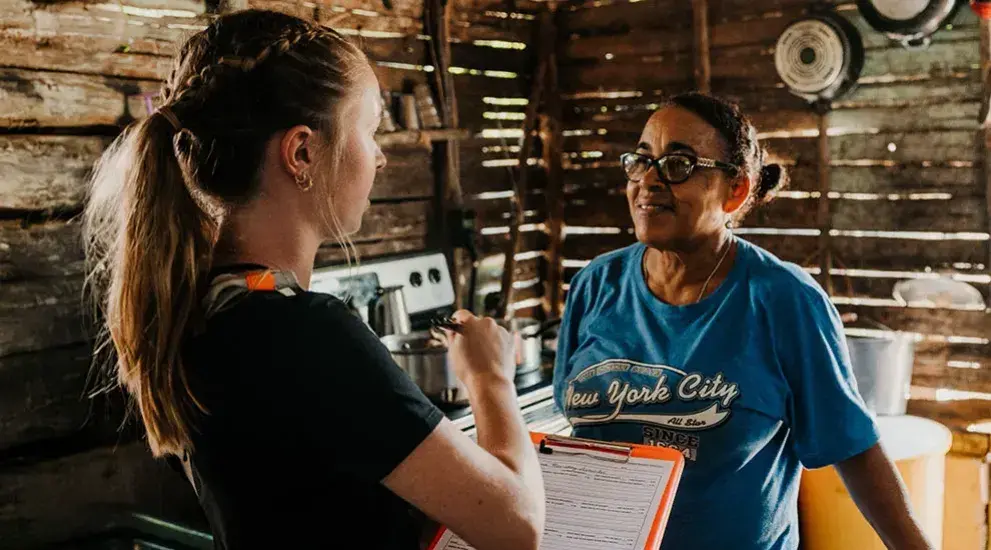
Nurse providing care in cabin setting.

Frequently Asked Questions

What is a Doctor of Nursing Practice (DNP) degree?

The Doctor of Nursing Practice (DNP) is a terminal degree in nursing that focuses on clinical practice. It prepares nurses for advanced roles in direct patient care, leadership, healthcare policy and systems improvement. DNP-prepared nurses apply evidence-based research to improve healthcare outcomes and patient care quality.

How does a DNP differ from a PhD in nursing?

A DNP focuses on applying research to clinical practice, enhancing healthcare systems and improving patient care. In contrast, a PhD in nursing is research-intensive and prepares nurses for academic and research-based careers, generating new nursing knowledge and theories.

Can I work while enrolled in the DNP program?

Many students continue working while completing their DNP, particularly if they enroll part-time. However, due to the rigorous coursework and clinical hours, full-time students may find it challenging to maintain full-time employment.

What career opportunities are available after earning a DNP?

Graduates with a DNP can pursue advanced roles such as:

  • Clinical Nurse Leader or Healthcare Administrator
  • Nursing Faculty or Educator in academic settings
  • Health Policy Advocate or Consultant
  • Chief Nursing Officer (CNO) or Nurse Executive in healthcare organizations

Is certification required after completing the DNP program?

Yes, depending on the specialty track. Graduates seeking advanced practice roles (such as FNP or PMHNP) must pass a national certification exam through organizations like the American Nurses Credentialing Center (ANCC) or American Academy of Nurse Practitioners (AANP).

Is the coursework online?

Coursework for the graduate nursing programs is offered online. Students are required to travel to our campus in Omaha, Nebraska during the program. The amount of campus visits will vary depending on the program and track. For more detailed information, please contact a nursing enrollment specialist at nursing@creighton.edu

Is RN experience required?

Professional nursing work experience is required prior to the first clinical course, please see below for details.

  • Family NP, Adult-Gerontology Acute Care NP and Nursing Administration and Leadership: Minimum 2,000 hours of professional nursing experience in direct patient care
  • Psychiatric Mental Health Across the Lifespan NP: Minimum 2,000 hours of direct patient care nursing experience in psychiatrics
  • Neonatal NP: Minimum 4,000 hours of direct patient care nursing experience in a level III or level IV NICU
  • Pediatric Acute and Primary Care NP: Minimum 2,000 hours direct patient care nursing experience in pediatrics. Only 500 hours of neonatal experience may be counted to the required 2,000 pediatric hours.

Licensure Requirements

State Licensure Requirements & Certification Eligibility

Graduates who complete the Adult-Gerontology Acute Care Nurse Practitioner DNP Program meet eligibility for national certification through the American Association of Critical-Care Nurses (AACN) and the American Nurses Credentialing Center (ANCC).

Graduates who complete the Family Nurse Practitioner DNP Program meet eligibility for national certification through the American Nurses Credentialing Center (ANCC) and the American Academy of Nurse Practitioners Certification Board (AANPCB).

Graduates who complete the Neonatal Nurse Practitioner DNP Program meet eligibility for national certification through the National Certification Corporation (NCC).

Graduates who complete the Pediatric Dual track DNP program are eligible to take the primary and acute care national certification exams through the Pediatric Nurse Certification Board (PNCB).

Graduates who complete the Psychiatric Mental Health Nurse Practitioner DNP Program meet eligibility for national certification through the American Nurses Credentialing Center (ANCC) and the American Academy of Nurse Practitioners Certification Program (AANPCP).

All of the above national certification credentialing agencies are accepted in all 50 states as the initial step in seeking licensure as an Advanced Practice Registered Nurse (APRN).

Professional Licensure Requirements

Professional licensure requirements are determined solely by each state and may change without notice to Creighton. While our information is updated annually, Creighton cannot guarantee continuous accuracy. Current and prospective students can find program-specific PDFs on our Academic Regulations page  or consult the appropriate licensing agency in the state where they plan to practice to confirm updated requirements for their program.

Creighton also cannot guarantee that any student will attain state-established licensure or certification in any field or jurisdiction. 

State Regulatory Requirements

Due to regulatory requirements in the states listed below, we are unable to accept or enroll students in the Doctor of Nursing Practice program who intend to reside in any of these states while pursuing a DNP: 

  • Delaware
  • Louisiana
  • Maryland
  • Massachusetts
  • New Hampshire
  • New York
  • Tennessee

Students residing in the state of Washington or intending to pursue clinicals in that state may only enroll in the following DNP tracks: Family Nurse Practitioner, Neonatal Nurse Practitioner, or Pediatric Primary and Acute Care Nurse Practitioner.

For all other states not listed above, regulations vary depending on the program and/or individual situation. Please email the Creighton University College of Nursing or call us at 402.280.3492 for questions regarding a specific state.

Accreditation

The Doctor of Nursing Practice program at Creighton University is accredited by the Commission on Collegiate Nursing Education.

Image
Commission on Collegiate Nursing Education logo

Contact Admissions

Lauren Alsaker 
Graduate students with last names A-L 
laurenalsaker@creighton.edu 
402.280.2703 
Schedule a Call

Katie Isaac 
Graduate students with last names M-Z 
katherineisaac@creighton.edu 
402.280.5254 
Schedule a Call

Close SidebarClose Sidebar