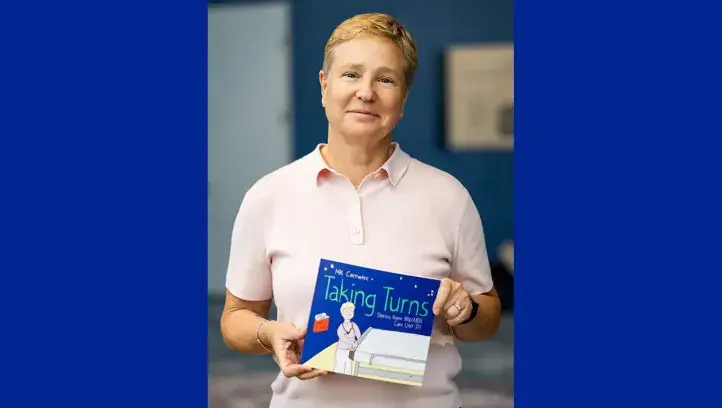
College of Nursing dean selected for inaugural national innovation fellowship

Creighton University College of Nursing Dean Jessica Clark, DNP, RN, has been selected for the inaugural cohort of the Bedford Falls Foundation Academic Nursing Innovation Fellows (ANI Fellows) program, a national initiative designed to advance innovation and systems-level change in nursing education.
The recognition highlights Clark's leadership and commitment to preparing the next generation of nurses. As an ANI Fellow, she will collaborate with nursing leaders from across the country to develop strategies that address evolving workforce needs and strengthen pathways for student success.
The two-year program brings together deans, curriculum leaders and clinical partnership experts from diverse institutions in a shared learning experience focused on transforming nursing education. Fellows work to create scalable solutions that produce practice-ready, employment-ready graduates, reduce early-career attrition and strengthen the nursing workforce.
As part of the program, Clark will provide valuable opportunities for collaboration, innovation and knowledge-sharing that will benefit Creighton faculty, students and healthcare partners.
Clark’s selection as an ANI Fellow reflects the innovative approach to nursing education that has long defined her leadership at Creighton. While she will contribute to national conversations about the future of the profession, that forward-thinking mindset is already shaping the nursing student experience. Faculty are using a range of innovative tools, from immersive simulations to personalized learning support, to help students prepare to make an immediate impact in patient care.
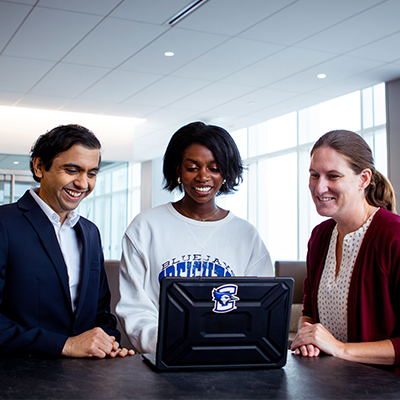
Nursing students practice difficult conversations with AI
Nurses often have difficult conversations with their patients: about a terminal diagnosis, intimate partner violence or end-of-life decisions. But learning how to have those conversations effectively can feel fraught. Many students wish for more emotionally realistic practice before they begin simulations or enter a clinical setting.
With a new artificial intelligence tool, nursing students can hone their skills with proprietary AI avatars that react in authentic ways, whether that’s in agitation or even anger. The tool was developed by Lindsay Iverson, DNP, BSN’05, MSN’09, APRN-NP, associate professor of nursing, Steven Fernandes, PhD, assistant professor of computer science, and Creighton computer science students. Tamara Oliver, PhD, BSN'09, RN, and other nursing faculty were also instrumental in helping bring the project to life.
Piloted in the spring of 2025, versions of the tool are currently used in several undergraduate and graduate courses at Creighton. “This AI simulation gives students the chance to practice and to get feedback that focuses on skills such as empathy, therapeutic communication and allowing time for silence in a conversation,” Iverson says. “The results were great—and students told us they wanted even more.”
This year, Creighton will introduce new versions focused on mental health and advance care planning conversations.
An AI tutor helps students master one of the trickiest classes
To navigate antimicrobial pharmacology, one of the toughest topics in the curriculum, graduate nursing students can now turn to RX24, an AI chatbot that helps them understand the concepts more deeply.
Designed by Iverson and Fernandes with support from Creighton computer science students, RX24 uses natural language to give students the kind of personalized back-and-forth they would get from a faculty mentor.
The project is supported through the National Science Foundation’s National Artificial Intelligence Research Resource Pilot Classroom initiative. Creighton is one of just 42 institutions nationwide to receive the allocation.
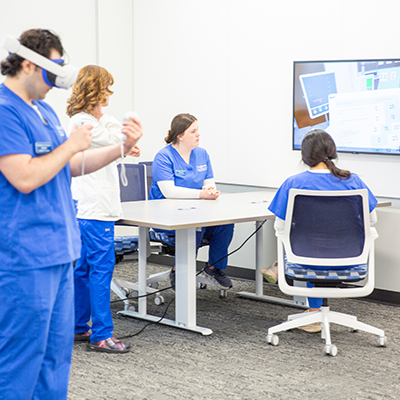
Virtual reality builds confidence through consistent clinical practice
With the help of virtual reality headsets and physical controllers, Creighton nursing students can practice common skills such as placing an IV and preparing for rare clinical scenarios, including postpartum hemorrhage.
The simulations ensure that students experience consistent presentations. And students can even use the technology to revisit their work and pinpoint areas for improvement.
Sarah Jo Ball, PhD, RN, assistant professor of nursing, who has led many of Creighton’s VR efforts, says the experiences give students an edge. “Students can feel confident that they have what they need to provide excellent care as professionals,” she says.
Supporting student well-being through innovative stress-reduction tools
Nearly half of all paramedic students experience post-traumatic stress symptoms after mandatory clinical rotations—a statistic Ryan Batenhorst, EdD’24, assistant professor of paramedicine, calls “alarming.”
But a new intervention, developed by Jason Doescher, BSCHM’94, and currently being tested with paramedicine and nursing students at Creighton, may offer some relief. Students use an app that offers a combination of music, video and audio cues to stimulate the parasympathetic nervous system in ways that enhance relaxation and reduce stress.
While the study is ongoing, Batenhorst says that if it is successful, the approach could be integrated into introductory courses throughout the curriculum. “There’s a lot of stress in the world of healthcare, but at Creighton, we believe in caring for the whole person,” he says. “This is an option to help our students feel cared for as they care for others.”