Meet the Institute for Population Health advisors

The IPH is guided by an advisory committee composed of Creighton faculty and staff representing a cross-section of the University community involved in population health work, along with clinical partner representatives from Nebraska and Phoenix. The committee helped establish the guiding vision and mission for the Institute and continues to provide leadership and guidance through quarterly meetings with IPH team leaders. Committee members also contributed to the development of a five-year strategic plan, which provides clear goals and direction for the IPH team. In each edition of the IPH Access newsletter, we will introduce you to two members of the advisory board.
Christian Janousek, JD, PhD
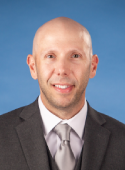
Christian Janousek, JD, PhD, is assistant professor of political science and international relations, in the College of Arts and Sciences. He was drawn to the Institute’s mission and vision as a way to advance interdisciplinary research and collaboration while engaging in population health efforts across Creighton and the broader community.
“I remain very excited about the mission and vision of the IPH as an opportunity to advance research and collaboration within the Creighton community and to engage in prospects for population health,” Janousek said. “My background and interest areas in public policy, administration and healthcare align with these objectives, and I wanted to contribute to the Institute’s initiatives.”
Janousek views the IPH as an important connector—bringing together faculty, staff and students around shared goals related to health equity, policy and community well-being. He noted that programs such as the Population Health Collective help translate Creighton’s values into action through research, learning and service.
“A primary goal through the IPH is to improve the health of our communities,” Janousek said. “By fostering strong partnerships, we can work toward solutions that are responsive to community needs.”
He also sees the IPH’s reach across Nebraska as an opportunity to expand population health action statewide, including addressing rural health disparities and strengthening health policy.
“To be part of the impact of the IPH at Creighton is truly inspiring,” Janousek said. “I’m excited about the future possibilities of this work.”
Jennifer Jessen, EdD
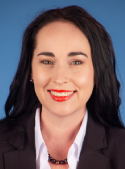
Jennifer Jessen, EdD, associate professor of nursing, has served on the IPH advisory board since its inception. She was part of the Institute’s earliest conversations around mission, vision and goals and describes the group as creative and collaborative.
“It was — and still is — a very exciting and creative group,” Jessen said. “I was asked to join because of my involvement in interprofessional education, practice and research, and I said yes because interprofessional work is inseparable from population health.”
Jessen values the board as a space where interprofessional relationships and community partnerships can grow. She said serving on the board has expanded her network while deepening her understanding of community needs.
“Being part of the board is such a worthwhile experience because I learn so much each time we meet — about the work of others, the needs of the community and what it means to build lasting partnerships,” she said.
She emphasized the IPH’s role in grounding Creighton’s teaching and learning in the realities of the communities it serves.
“The IPH reminds us that our campus extends beyond its physical boundaries,” Jessen said. “It helps faculty, students and health professionals see how their work can make a real impact.”
Jason Marshall, PhD
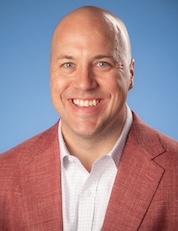
Jason Marshall, PhD, assistant professor of management in the Heider College of Business, joined the IPH advisory board in summer 2023, participating in the board’s inaugural planning meetings that established its vision and mission. A longtime advocate for community health, Marshall brings experience from his previous service with Live Healthy DeKalb County in Illinois and as chairman of the board for The BRIGHT Coalition, a nonprofit focused on improving population health across a 10-county region in southcentral Kentucky.
Marshall said his interest in population health began as a personal pursuit of healthy living but soon grew into a broader understanding of the role social determinants play in shaping health outcomes.
“Health is not merely an individual choice,” he said. “It’s influenced by the environments and systems we create. The IPH’s commitment to education, research, and advocacy aligns with my passion for advancing health equity.”
He views the IPH as a way for Creighton to live out its Jesuit values by caring for the whole person and forming agents of change.
“Health inequities are not reserved for developing nations — they exist in our own backyards,” he said. “By bringing together multidisciplinary expertise from across Creighton’s schools, my hope is that our work in the IPH can radiate outward to improve health outcomes for people throughout Nebraska and Arizona, and beyond.”
Holly Sak, EdD

Holly Sak, EdD, assistant professor in the Creighton College of Nursing, joined the IPH advisory board in May 2024. A public health nurse, educator, and advocate, Sak said her decision to join was rooted in her belief that “change happens at the speed of trust.” Building authentic, trust-based relationships, she said, has been central to her work in public health and community engagement, making the board’s mission a natural extension of her values.
“The IPH’s mission connects directly with what drives me every day: advancing health equity and creating opportunities for people to live healthy, full lives,” Sak said. “The board brings together a diverse and talented group of people, all passionate about improving health outcomes through collaboration, inclusion, and action.”
Sak views the IPH as a living example of Creighton’s Jesuit mission in action — a connector linking academia, healthcare systems, and community organizations to address complex health challenges. “Population health work reminds us that improving health isn’t just about hospitals and clinics,” she said. “It’s about where people live, learn, work, worship, and play.”
For Sak, being part of the IPH board represents the intersection of service, scholarship, and community — “the space where real transformation begins.” Recently, she deepened her involvement by serving as a Champion for the IPH Population Health Collective to help grow Creighton’s interdisciplinary community committed to health justice.
Jillian Wallen, BDS, MS
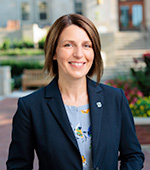
Jillian Wallen, BDS, MS, dean of the School of Dentistry and professor of pediatric dentistry, has served on the IPH advisory board since its inception in 2023. Wallen brings a unique perspective to the board as a member of a healthcare profession that is typically not included in interprofessional healthcare efforts. She said she is excited to bring the idea of oral health as part of whole healthcare to the board in discussing the goals and strategies of the IPH. She sees the board’s primary role as guiding and supporting the institute in its efforts.
Wallen also said she is pleased that the IPH has brought Human Centered Design (HCD) to Creighton.
“HCD was part of the work I did at a previous institution,” she said. “HCD certainly can benefit the patient experience in healthcare, but it can also be broadly applied across the schools and colleges to benefit the community.”
Wallen said she also participated in HCD from a different perspective — as a patient advocate as a parent with a child with special healthcare needs.
“I’m excited to see how it evolves here on campus,” she said. “I can speak from experience and share perspectives from different lenses. It’s nice to have an opportunity to reframe the conversation; to ask questions like, ‘How can we use this in the healthcare space?’ and ‘How can we listen to the community we serve to find out what they need?’”
Monica White
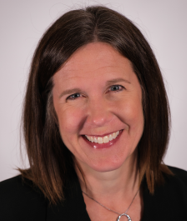
Monica White, assistant professor of cultural and social studies and director of the social work program, is a licensed master social worker and licensed mental health practitioner. White joined the board because she was excited by the Institute’s focus on innovation in healthcare delivery to increase access.
“The IPH is important because Creighton is a leader in educating the workforce,” White said. “The most obvious are those students who will be direct healthcare providers. The less obvious, but equally important, are the many others who will become community leaders who help form the network of resources focused on holistic health, mental health and well-being. The IPH helps synthesize and mobilize many moving parts into sustainable systems-level change.”
The board, White continued, provides a space where people from many perspectives can share ideas, including community, medical providers, researchers, academics, clinicians, staff and more.
="" p="">