

28.4% of respondents
Said they obtained a job at their capstone site or a similar site as a direct result of their doctoral capstone


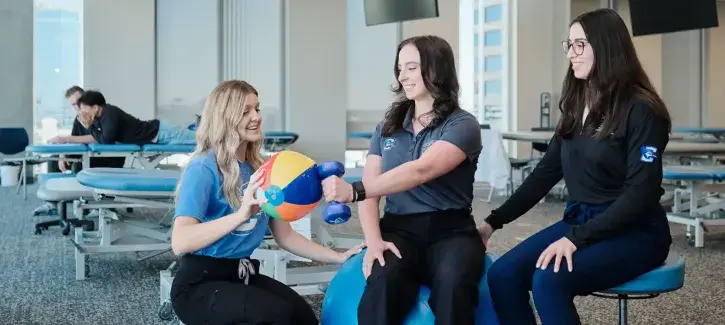
For Creighton occupational therapy graduates, the value of the OTD often becomes clearest in practice, when they are asked not just to know what to do, but to solve problems, lead, create and contribute.
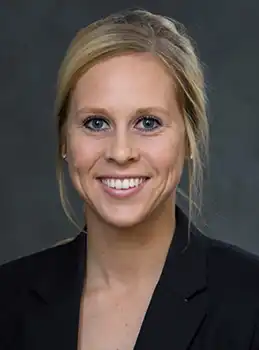
At the Arizona Burn Center, Whitney Orji, OTD’22, often meets people during one of the most difficult stretches of their lives.
Recovery can be painful, frightening and slow. Patients may be relearning ordinary movements or trying to imagine what life will look like after a serious injury. Orji sees part of her job as helping them believe there is something on the other side of that work.
“They don’t see light,” Orji said. “But you have to encourage them that there is light.”
That emotional connection is part of what drew Orji to occupational therapy in the first place. She liked the idea of helping people get back not simply to movement or function, but to “the person you were, doing the things that you like to do, you want to do, that make you, you.”
Creighton gave her the foundation. Practice continually asks her to expand it.
Orji works alongside physicians, nurses, psychologists, dietitians and other healthcare professionals, continually adapting what she knows to the person in front of her. “It’s all problem solving,” she said. “It’s being creative and making things and adapting things.”
That is one way to begin answering a question prospective occupational therapy students often have when comparing graduate programs: What does doctorally prepared look like in practice?
For students weighing their graduate school options, the first question is often how an occupational therapy doctorate differs from a master’s degree and what that difference looks like in practice.
Occupational therapists help people return to the lives they want to live, the daily occupations that make them who they are, whether that’s picking up a newborn, walking a daughter down the aisle or holding a pencil in pre-K. Both the master’s and doctoral degree paths can prepare someone to enter the profession.
The doctoral route builds more into that preparation.
Creighton, which launched the nation’s first entry-level OTD, now offers one program across four locations in Omaha, Phoenix, Denver and Anchorage. That added preparation in leadership, professional identity, interprofessional practice, program development and a 14-week doctoral capstone is deliberate, said Erin Young, OTD, BCPR and assistant professor of occupational therapy.
“We’re not just preparing you to get your first job. We are preparing you to build a career.”
Creighton’s curriculum is built around three nested themes: occupation at the center, professional practice and professional identity, with leadership threaded throughout. Students arrive wanting to help people, Young said. They leave with a stronger understanding of who they are as occupational therapists and what they can contribute.
“Creighton’s follow-up surveys show graduates beginning to emerge as leaders early in their careers,” Young said. “Especially between that one- and five-year mark, our students are really emerging as leaders in the profession.”
Creighton students learn to listen to other perspectives, communicate what occupational therapy contributes and understand how their work fits into a larger system of care. In Creighton’s 2025 Graduate Exit Survey, two of the graduates’ three highest-rated areas of preparedness involved interdisciplinary teamwork and professional collaboration.
Orji found her specialty through clinical experience.
Her first long clinical rotation was in pediatric outpatient care. Her second brought her to the Arizona Burn Center. She knew almost immediately that she had found the kind of work she wanted to do.
She later returned to the burn center for her doctoral capstone.
Her focus was mental health, an important part of recovery for people who have experienced serious burns. Orji developed programming that future Creighton students could use with burn survivors.
The assignment initially felt enormous.
She had 14 weeks to research the need, continue patient care, develop the program and make sure what she created was grounded in evidence.
Looking back, Orji believes that responsibility was the point.
“It teaches you how to do hard things and do it well,” she said. The experience changed how she approaches difficult work today.
“I’m not scared to do a research project,” Orji said. “I’m not scared to handle big take-ons because I know how to handle it. I know how to develop it. I know how to finish it.”
Perhaps even more important, she learned what to do when she does not have an immediate answer. “If you don’t know it, you learn how to find it out, figure it out.”
That is one-way doctoral preparation becomes practical.
Creighton’s capstone is not simply about producing an academic paper. Students apply their growing expertise to develop deeper skills in areas that can include clinical practice, leadership, advocacy, research and management.
Young said graduate surveys consistently show that students see the doctoral capstone as one of the strongest contributors to their leadership development.
The experience can also create a direct connection to a career.
In a one-year follow-up survey of recent Creighton OTD graduates, 28.4% of respondents said they obtained a job at their capstone site or a similar site as a direct result of their doctoral capstone.
Said they obtained a job at their capstone site or a similar site as a direct result of their doctoral capstone
That does not make the capstone a 14-week job application. It does show that students are doing work in environments where employers, mentors and colleagues can see how they think, collaborate and contribute.
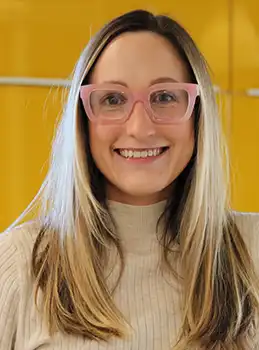
For Dayna Prast, OTD’19, doctoral preparation eventually helped her imagine a different way to practice.
Prast completed Creighton’s Regis Hybrid pathway in Colorado and focused much of her education on pediatrics. Her doctoral capstone took her into a neonatal intensive care unit at a Denver hospital, where she later worked after graduation.
She loved the clinical work but became frustrated by some of the limitations she encountered in a large healthcare organization. So, she began asking a different question: Could she build something herself?
Prast started slowly, opening a pediatric occupational therapy practice in Castle Rock, Colorado, in an office of less than 200 square feet. She kept her other jobs while developing a caseload and learning what families in the community needed.
Today Prast owns Arise Therapy Group, a pediatric practice that has grown to seven therapists. Drawing on her family’s background in childcare, she built a niche no one else in her market occupies: partnering directly with early childhood education centers and observing young children in their natural environments, often before any formal diagnosis is made.
She does not claim that an OTD is required to open a private practice. In fact, she is careful to say otherwise. What she does see is a connection between doctoral education and the way she learned to approach program development.
In one of Prast’s program development courses, students were asked to identify a community need, think through how to develop a program from the ground up and determine how that program could fit within an organization. Years later, Prast recognized a similar process in building her own practice.
“Identify the location, identify the need, fill the gap and then tailor it to whatever you want it to look like,” she said.
That entrepreneurial thinking continues in Creighton’s curriculum today. Students receive experience in management and program development, including developing and presenting plans for programs or services. The goal is broader than preparing every graduate to own a business. It is teaching future occupational therapists to notice needs, think strategically and understand that sometimes the right service does not exist yet.
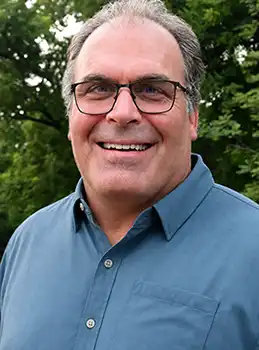
For Larry Zier, OTD’08, owner of Zier Institute Therapy Services, the ability to create and adapt is central to occupational therapy.
Zier has spent years building a distinctive approach in his pediatric practice in Omaha and Chicago. He also works with occupational therapy students during clinical education.
He describes OTs as “problem solvers” and “puzzlers,” people willing to draw from previous experiences and ask whether an idea might work differently for the person in front of them.
And he challenges students to take risks while they still have mentors around them.
“Make a mess. This is your chance,” he tells students during their clinical experiences.
Young describes the same learning challenge from the faculty side. “Our labs, our classrooms are safe spaces to try things, to make mistakes,” she said. “The learning happens in the struggle.” The program uses varied assessments — simulations, projects, practicums — precisely so students learn that serving a person well matters more than protecting a GPA.
The Creighton doctoral capstone adds 14 weeks in which students must apply that judgment to a sustained area of practice, inquiry or program development before graduation.
There is no single measure that can answer that question for every prospective student.
Cost matters. So does time. Those are reasonable considerations when comparing occupational therapy programs. But the value of an education is also measured over the career that follows it.
For Orji, doctoral preparation is visible when she takes on a complex project without being intimidated by its size. It is visible in the burn center when multiple professions work together and occupational therapy has a meaningful voice at the table. She now helps teach Creighton students herself and works with students who rotate through the burn center.
For Prast, it helped provide a framework and confidence to recognize an unmet need and build a pediatric practice around it.
For Zier, it is reflected in years of developing his own approach to care, then challenging another generation of occupational therapists to become more thoughtful, creative practitioners.
Their careers look very different.
That may be the point.
A doctoral education cannot tell a future occupational therapist exactly where a career will lead. What it can do is provide more opportunities to explore, solve, lead and create before that career begins.
When comparing occupational therapy programs, prospective students can look beyond the degree title and ask deeper questions:
For Creighton graduates like Orji, the answer to “Why a doctorate?” has become clearer with experience.
Doctoral preparation did not mean leaving school with all the answers.
It meant being ready to find the next one.