Nebraska requires a score of 270 to pass
Bar admission requirements vary by state. Nebraska requires a score of 270 to pass. Neighboring states like Missouri and Minnesota require 260, while Iowa requires 266.


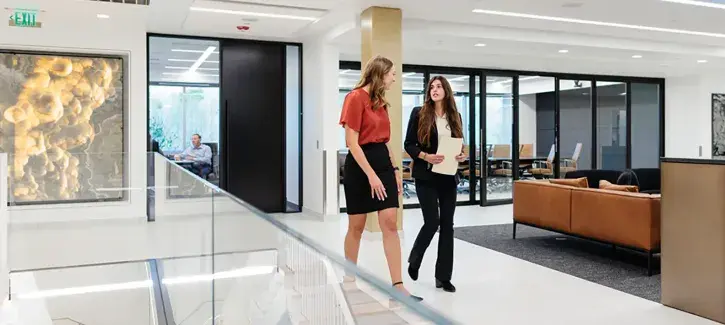
For 120 years, this Jesuit law school in Omaha has been preparing students for the practice of law and helping them build careers across the nation.
Every future law student wants clarity about two things: passing the bar and landing a job. At Creighton University School of Law, the path to both starts on day one through intentional, personal preparation built for real results. It’s an approach that combines rigorous academics with hands-on experience, faculty mentorship with professional networking and bar preparation that begins long before graduation.
“We’re not just admitting students, we are admitting future colleagues,” says Dean Joshua Fershée, JD. “They are going to be advising clients, and will be responsible for people’s money, people’s liberty, people’s freedom, and people’s kids. This is serious work.”
That seriousness of purpose drives everything at Creighton Law. The school consistently achieves competitive bar passage rates and strong employment outcomes, with more than 90% of graduates employed or pursuing advanced degrees within 10 months of graduation. The numbers tell part of the story. The real difference is in how Creighton prepares students to succeed.
Outstanding legal training unites strong theory with real skills. Creighton Law brings both together in a way that prepares students for practice.
“We focus heavily on skills,” Fershée says. “Our students tend to be trained in more hands-on situations than many law schools. We’re making sure that students have access to experiences that many lawyers don’t see until they’re in practice.”
That philosophy is evident throughout the curriculum. Students participate in mock trial, moot court, negotiation, arbitration and mediation competitions. They complete externships with law firms, prosecutors, public defenders, nonprofits and corporations. They also serve in clinics representing real clients under faculty supervision.
The skills focus isn’t an add-on to the academic program. It’s built into courses from the first semester through graduation.
Daniel Real, JD, an associate professor on the Creighton Law faculty for more than 20 years, teaches classes at every level. Many are deliberately small-enrollment, skills-based courses that allow intensive one-on-one work with students.
“We’re trying to develop those hands-on skills so that when they go out and have to do this, there’s something they can reflect on,” Real says. “Everything they experience in real life, every case is going to be different. Every case is going to have a new twist, a new difficulty or a new hurdle. Having some meaningful context of, ‘okay, I’ve interviewed somebody before, and I remember kind of how some of these things went,’ that’s really important.“
In Real’s commercial contracts class, students interview actual business people, research contract requirements, draft engagement letters and navigate the complexities of attorney-client relationships. The experience mirrors real-world practice in ways that traditional casebook learning cannot.
“You get your foot in the door somewhere, and you can talk to somebody you’re applying for a job to and say, ‘hey, I took this class in law school, and we spent all semester doing this,’” Real explains. “Day one, I’m bringing some experience, and I do have some context.”
Professor Collin Mangrum, JD, SJD, has been teaching at Creighton for 45 years. Early in his career, he recognized something that legal education has been slow to embrace.
“I said that law school needs to become more experiential,” Mangrum says. “We need to be more like the medical schools.” At the time, that approach was uncommon. In recent years, the American Bar Association has mandated that a certain percentage of law school classes must be experiential. Creighton was ahead of the curve.
Mangrum coaches trial teams that compete at regional and national levels, including hosting the prestigious National Trial Competition recently at the federal courthouse in Omaha. Students who participate often describe it as the capstone of their law school experience.
“The people who go through this, it’s not just the competition,” Mangrum says. “Getting ready for it, you learn a lot about trying cases. So when they go out, and they start doing it, they naturally feel more comfortable.”
The results speak for themselves. Mangrum recalls a former student, Ryan Crnkovich BSBA'13, JD'15, who was stationed in Colorado Springs awaiting JAG school. His commanding officer invited him to watch a trial. Ryan asked if he could try the case instead.
“The guy called his bluff and had him do the closing arguments and the direct and cross of the experts, which are the hardest part of the trial,” Mangrum says. “He won it. And the judge said afterwards, ‘How many trials have you had?’ He said, ‘Well, this is my first real trial.’ The judge said it’s the best cross-examination of the expert he’d ever seen. And your closing argument was brilliant.”
Mandy Whiddon, JD, joined Creighton Law as assistant dean for career development in 2016. Since then, she’s built a comprehensive support system that engages students from their first semester through graduation and beyond.
“We work with students beginning in their 1L year and provide them with the necessary resources so that they are ultimately able to find their dream job and achieve their career goals,” Whiddon says.
Those resources include resume and cover letter development, individual counseling sessions, on-campus interviews with law firms and organizations, lawyer lunches where attorneys discuss their practice areas, networking events and mock interviews with alumni.
The approach emphasizes both opportunity and student initiative.
“Networking is the single most important thing that students can do to achieve their career goals,” Whiddon explains. “We provide opportunities to network with attorneys in the area as well as nationally, so students are able to take the steps towards finding employment opportunities.”
Real also emphasizes the importance of keeping an open mind about career paths. Many students enter law school with specific goals, only to discover opportunities they never considered.
“I try to talk to students early on about having a very open mind,” Real says. “Go to the networking events. Talk to people. Find out what the atmosphere at that firm is like. You may discover that your best fit is something that you had never considered before.”
Creighton’s location in Omaha and the school’s strong reputation in the regional legal market create abundant externship opportunities. Approximately 150 students participate in externships each year, gaining experience with organizations ranging from the Douglas County Attorney’s Office to Berkshire Hathaway, and from federal government agencies to Habitat for Humanity.
These placements offer more than resume builders. They often lead directly to employment. Whiddon says. “It’s a try-before-you-buy opportunity. They get to experience what that work is like, and the employer gets to see them in action.”
“Success for me is our students utilizing the resources that are available in the office,” Whiddon says. “Anytime I have a student who tells me that they have found a position that they were looking for, I am excited for their success.”
Mitchell Shaw, JD’24, knew exactly what he wanted to do with his law degree. The Colorado Springs native had decided in high school that he wanted to be a criminal prosecutor. After participating in a mock trial in civics class, he found his calling in advocating for victims.
“You have to be confident in your case to be a strong advocate for the victim when you take it to trial,” Mitchell says. “That’s where I want to be.”
At Creighton, Mitchell made the most of every opportunity. He served as Student Bar Association president, participated on the arbitration trial team and made lifelong friends. One course in particular stood out: Scientific Evidence, taught by Professor Mangrum.
In this class, students don’t just read about expert testimony. They practice cross-examining real experts in simulated trials. It’s an experience most attorneys don’t get until they’re four or five years into practice.
“We hear that some employers will hire a Creighton student anytime because they can handle those kinds of cross examinations,” Fershée says. “They are practice-ready in a way that you can’t get without a deep dive into something very complex.”
Mitchell’s dream became a reality. After graduating from Creighton Law, he accepted a position at the Fourth Judicial District Attorney’s Office in Colorado Springs, where he had interned for two summers during law school. His journey from Creighton’s classrooms to the courtroom demonstrates what happens when focused determination meets quality legal education.
Passing the bar exam is crucial. Creighton doesn’t treat it as a single summer hurdle. Instead, bar preparation is woven throughout the three-year law school experience.
“Our goal is to prepare students for their careers, not only for the day they take the bar exam,” says Maryl Sattler, JD, an assistant professor who works closely with students on academic success and bar preparation.
The School of Law Student Success program works with each student individually, meeting them where they are in their bar preparation journey. First-year students have access to specialized seminars on study skills and exam strategies. In the third year, a comprehensive review class helps students practice for the bar exam while still in school.
Creighton partners with BARBRI, a leading national bar exam preparation company widely respected for its long history, comprehensive courses and strong record of helping law graduates succeed on the bar exam. This partnership provides every student with bar prep resources throughout their three years, not just after graduation.
Faculty incorporate practice questions into their courses, so students see the format and question types long before they sit for the actual exam.
“We’ve implemented programs to help students study the law while they’re here and get instruction ongoing,” Fershée says. “When they’re ready, they have the resources they need.”
Creighton’s bar passage rates remain competitive, and the school’s ultimate bar admission rate, measuring success within two years of graduation, is consistently near or above 90%.
Bar admission requirements vary by state. Nebraska requires a score of 270 to pass. Neighboring states like Missouri and Minnesota require 260, while Iowa requires 266.
Sattler emphasizes that passing the bar, while crucial, is just one piece of what makes a successful attorney.
“Passing the bar is important, but it isn’t our only focus,” she says. “We want to make sure our students are prepared to practice law.”
Walk the halls of Creighton Law, and you’ll notice something: faculty office doors are open. It’s a physical reality and a philosophical commitment.
“Professors and their open-door policy were critical during my law school days,” says Sean Nakamoto, JD’17, who has built a remarkable career path from Omaha to Apple to Google. “I have a lot of mentors, whether they know it or not.”
That mentorship begins in the classroom, where smaller enrollment in skills-based courses allows faculty to work with students one-on-one. Faculty members teach courses at every level, building relationships that extend well beyond their time at Creighton.
Faculty also leverage their professional networks to help students. When a student wants to practice in a different city or state, faculty make calls, send emails and arrange introductions.
“We use our alumni network very aggressively,” Fershée says.
Different faculty members bring expertise in various practice areas. Students interested in international law connect with one professor, those interested in intellectual property law with another. The diversity of faculty expertise means students can find mentors aligned with their specific interests.
“Everyone is always willing to help in any capacity,” Whiddon says. “Students will flock to the professors who teach in the areas of law that they are interested in because our professors are always available to assist them.”
Nakamoto wasn’t sure he wanted to be a lawyer when he started at Creighton. He began his legal studies five years after earning his undergraduate degree. He made the most of his experience, working two summers at Baird Holm in Omaha and accepting a position there after graduation. Then he moved to Polsinelli in Denver, where he billed nearly 2,200 hours in 11 months. When he saw a posting for a position at Apple, he applied, never thinking he could make the cut.
“Creighton is known throughout the region and well-respected in Omaha, Kansas City, Denver and beyond,” Sean says. “I used that as a stepping stone to an international company.” Today, Sean serves as associate legal counsel working on developing Google’s AI model, Gemini, at Google DeepMind.
His advice to current law students? Focus on the fundamentals. “Legal writing is the most important thing you can learn while you’re in law school,” Sean says. “A close second would be research skills. You need to get as much experience as possible from law school.”
Underlying everything at Creighton Law is a commitment to forming ethical, compassionate professionals who understand their responsibility to serve others.
That seriousness of purpose infuses the curriculum with attention to ethics and professionalism. It shows up in the mentorship relationships between faculty and students. It’s reflected in the commitment to preparing students to serve clients well.
“I want students to remember us as both challenging and caring, and I want students to be proud of this degree,” Fershée says. “I also want to make sure that we are making the profession better.” For prospective law students, the Creighton advantage is straightforward: rigorous academics, early bar preparation and the professional support that leads to strong career outcomes. You’ll join a community that invests in your success, gaining real experience and personal guidance that make you practice-ready from your first day as a lawyer.
“We’re committed to getting people where they want to go,” Fershée says. “And historically, we have.”
The results tell the story. The preparation, mentorship and community behind those outcomes are what set Creighton apart—and what turn your law school investment into career success.