The hidden energy network that keeps Creighton cool
Spring has arrived, which means warmer days are ahead for our Phoenix and Omaha campuses. So what keeps our campuses cool?
In Phoenix, 126 eco-friendly water-source heat pumps provide cooling (and heating) for our Virginia G. Piper Health Sciences Building. In Omaha, chilled water is cycled through 7,300 feet of buried and tunneled piping to cool our facilities.
Learn more below about these and other energy-efficient systems that keep our classrooms, labs and residence halls comfortable year-round.
Phoenix Campus
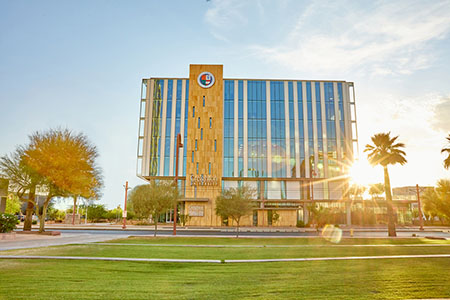
Opened in 2021, every detail of the 195,000-square-foot Virginia G. Piper Charitable Trust Health Sciences Building was designed to reduce energy use and promote long-term efficiency, including the use of 126 water-source heat pumps located throughout the building.
Heat pumps provide both heating and cooling in one unit, transferring heat either out of or into a building depending on the season. In Phoenix, water circulates in a loop through heat pumps located in the ceilings in various zones throughout the building, providing heating or cooling for the entire facility.
“Unlike an air-cooled heat pump, like those more often found in Nebraska, the dry, hot air of Phoenix works best with this water-cooled system,” explains Andrew Baruth, PhD, director of the Office of Sustainability Programs. “The heat from the rooms gets absorbed by the heat pump, which then dumps it into the water loop. Then, a cooling line rejects the heat into the atmosphere by evaporating water into the outside air.”
This type of system is significantly more efficient than traditional HVAC systems, Baruth says.
Some other significant energy-saving features on the Phoenix campus include:
- The building recycles heat between building zones to reduce energy waste.
- There are automated lighting and shading systems, adapting to natural light, that help keep spaces cooler.
- Smart building software adjusts lighting and temperature based on room usage.
Omaha Campus
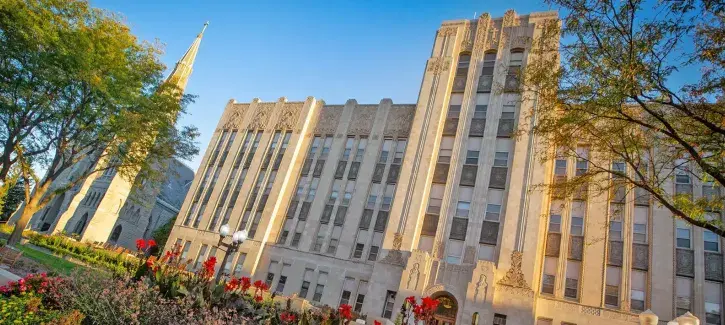
Creighton uses district energy on its Omaha campus, a centralized system that heats and cools our buildings using steam and chilled water. This hidden network runs beneath our feet and behind the scenes, without relying on rooftop chillers or outdoor air conditioning units.
Our cooling comes from a central plant operated by Cordia, which sends chilled water through insulated pipes to our campus buildings. This approach:
- Reduces energy waste
- Frees up space on rooftops
- Lowers noise and improves aesthetics on campus
What Is District Energy and How Does it Work?
District energy is a system that produces thermal energy, steam for heating and chilled water for cooling, at a central plant and distributes it through underground pipes to more than 90 buildings throughout downtown Omaha, including those on Creighton’s campus. Instead of each campus building having its own boilers or air conditioning units, Creighton taps into this shared network for efficiency and reliability.
Creighton University joined the network in 1978 during a period of rapid growth on campus, eliminating the need for round-the-clock maintenance on costly boilers and chillers, reducing capital expenses and gaining reliable heating and cooling.
“Through the system, steam and chilled water are generated at Cordia’s plant and delivered to campus through buried pipes and underground tunnels,” Baruth says. “On cold days, you might notice steam rising from relief pipes. Those ‘upside-down J’ pipes are a normal part of the system, releasing pressure safely.”
A Sustainable System
District energy is not just convenient. It is sustainable and directly supports Creighton’s climate commitments. By using a centralized system, Creighton:
- Reduces greenhouse gas emissions compared to individual boilers and chillers
- Improves energy efficiency
- Supports long-term reliability for campus operations
Want to see how district energy supports our campus and sustainability? Watch this short video.
Want to see how district energy works in Omaha? Watch this 5-minute video.
More to Come
In April, as we celebrate Earth Month, we will share how Creighton is taking this system even further with Cordia Clean, a product that significantly reduces greenhouse gas emissions and supports our campus sustainability goal to reduce Scope 2 emissions by 50% in 2028 and achieve carbon neutral well before 2050.