The science of focus: Study smarter, not longer

Today's students are juggling long to-do lists, tight deadlines and TikTok feeds overflowing with productivity hacks. But what actually works when it comes to studying, and what’s just noise?
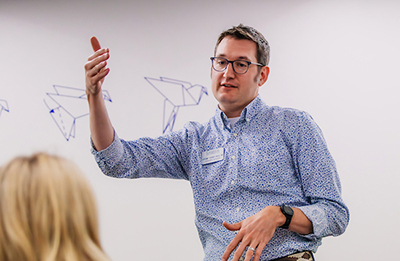
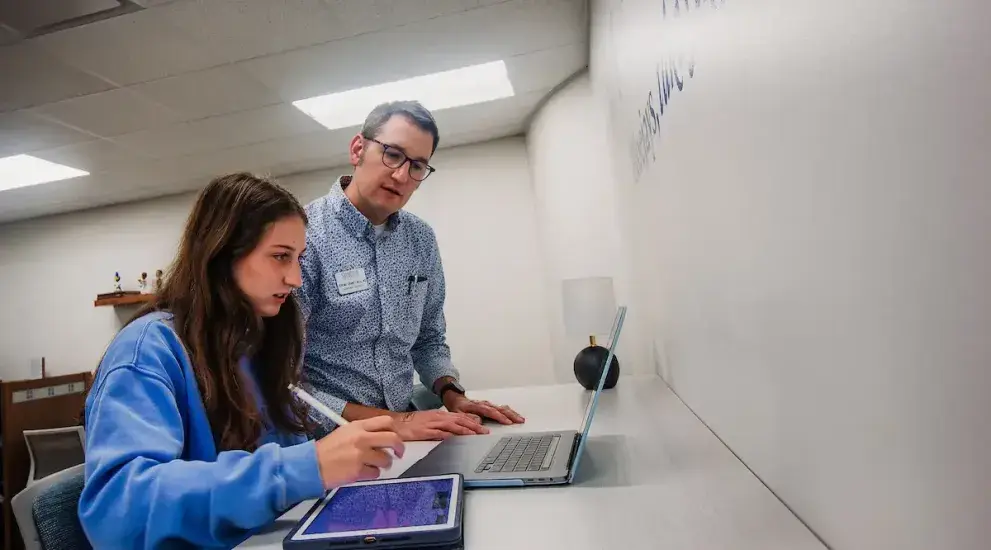
Jeremy Graney, MEd, MS, assistant director for outreach and intervention in the Office of Academic Success, is here to bring clarity. Drawing from cognitive science and years of coaching Creighton students, Graney breaks down the habits that genuinely improve learning, focus and retention.
“Studying smarter is about understanding how your brain actually works,” Graney says. “When you align your habits with real cognitive science—not trends—you learn more, stress less and show up at your best.”
Why some study habits feel productive but don’t work
One of the most common mistakes Graney sees is the idea that simply reading over notes or highlighting material equals learning.
He calls this passive learning.
“When you're looking at your notes and you're following along with the book, it seems like it makes sense,” he explains. “But you’ve never really tested your understanding. So, when you go into the test and no longer have your notes, that confidence disappears.”
His advice: Shift from passive to active strategies, especially as finals approach.
The TikTok question: Are study hacks helping or hurting?
Across social media, students see an endless parade of “focus boosters”—binaural beats, color-coded notes, mushroom coffee, Pomodoro timers, “study with me” livestreams.
Graney says the problem often isn’t the hack itself—it’s the phone.
“There are a lot of study tips out there,” he says. “But going to your phone to find them usually becomes the distraction. Focused, distraction-free time still works best.”
Some hacks can help, but only if they support real cognitive principles. And that’s where students should focus their attention.
Why spaced repetition beats cramming.
If students change just one habit this exam season, Graney recommends spacing out study rather than relying on last-minute marathons.
“Spaced repetition is great because it slowly builds that foundation,” he says. “Our brains need downtime to create those connections.” And that steady work pays off. Instead of just retaining material for the test, students begin to understand it deeply enough to analyze and use it—an outcome that cramming rarely produces.
Active recall: The most powerful study tool students overlook
Graney’s top recommendation for better studying is simple: practice retrieving and not rereading.
“Active recall helps identify where your gaps of understanding are,” he says. “When you're just reading through notes, it all makes sense because you’re reading along with them.” But when students try to explain a concept—without notes—they immediately see what they do and don’t know.
Study groups make this even more effective. “If you can explain it, you really understand it,” he says.
How environment affects focus and memory
Graney encourages students to be intentional about where they study.
“Study in a space that's meant for studying,” he says. And don’t underestimate the power of proximity: “There’s this science of body doubling. We're more likely to mimic what others are doing.”
In other words, surround yourself with people who are actually studying. “If I’m in a common space and we’re all not doing anything, I'm not going to do things,” he adds. “Finding places where the vibe is focus time is helpful.”
Where Creighton students can get personalized support
Academic Success offers several resources across campus:
- Success Center, Lower Reinert-Alumni Library – Academic coaching, study plans and finals mapping tools
- Success Hubs – Daytime coaching and evening support from graduate assistants right in your dorm
“There are a lot of resources on campus,” Graney says. “You can meet with an academic coach, get study planners and map out a finals strategy.”
Visit Academic Success for coaching, personalized study plans and evidence-based strategies to help you finish strong.