Technology-forward pharmacy education at Creighton University

Technology has always played a role in pharmacy practice, but the pace and scale of change in recent years have reshaped the profession in profound ways. Today’s pharmacists are expected to navigate complex digital systems and analyze expanding data streams while applying clinical judgment in technology-rich environments. Preparing students for this reality is foundational in Creighton’s approach to pharmacy education.
Technology-driven pharmacy practice
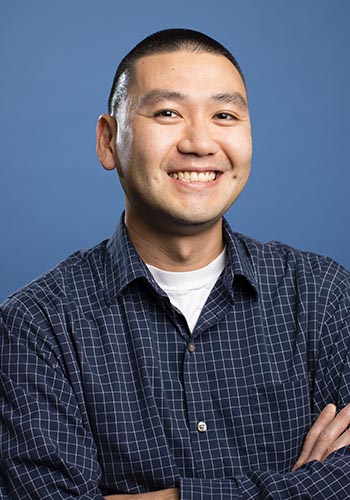
“The field of pharmacy is definitely experiencing rapid technological change and advances that basically mirror what is being experienced in healthcare broadly,” says Kevin Fuji, PharmD, MA, associate professor of pharmacy at Creighton University’s School of Pharmacy and Health Professions (SPAHP). Those changes affect nearly every aspect of practice, from how pharmacists access information to how they collaborate with interdisciplinary care teams and support patients.
Telehealth, AI and digital tools
The widespread adoption of electronic health records has accelerated the use of tools such as electronic prescribing, clinical decision support, telehealth, mobile health applications and emerging applications of artificial intelligence. While these technologies improve efficiency and safety, they also require pharmacists to apply heightened clinical vigilance and critical thinking—skills Creighton intentionally builds into its curriculum.
As Kimberley J. Begley, PharmD, RPh, FNAP, professor of pharmacy practice, notes, contemporary practice relies on sophisticated pharmacy management systems, smart infusion technologies, prescription drug monitoring programs and remote patient monitoring platforms. Artificial intelligence, she adds, is becoming an important force in medication safety and workflow optimization, while still demanding thoughtful professional oversight.
Experiential learning at Creighton
At Creighton, technology-forward education begins early. Students participate in mock telehealth simulations, virtual rounds with physician assistant students and training with MyDispense, an interactive platform that simulates real-world community pharmacy scenarios within an electronic medical record. These experiences allow students to practice decision-making alongside communication and collaboration in digital care environments.
Fuji, who has spent more than a decade engaged with the American Society of Health-System Pharmacists’ (ASHP) Section of Pharmacy Informatics and Technology, brings current practice perspectives directly into the classroom. “Our goal as educators is always to provide opportunities for students to actually apply their learning,” he explains.
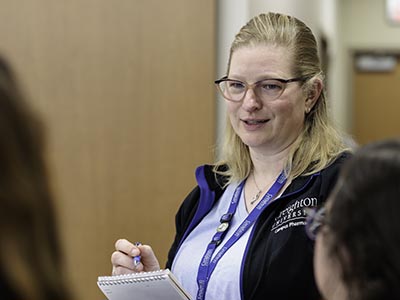
Experiential learning continues throughout the program. Jess Cumber, PharmD, BCPS, assistant professor at Creighton, highlights hands-on exposure to hospital-based technologies such as remote IV verification and continuous glucose monitoring (CGM) systems. Through a longstanding grant supported by Dexcom, students can wear CGM sensors from Dexcom or Abbott “to gain insight into the lived experience of patients with diabetes, minus the insulin,” says Cumber. Faculty-led debriefs help students evaluate each device’s strengths and limitations and translate that insight into patient-centered care.
The goal, Begley and Cumber emphasize, is confidence and readiness. “Repeated, authentic engagement with pharmacy systems and tools allows students to move beyond theoretical understanding to applied competence,” Begley says. Structured learning environments give students the freedom to practice, reflect and improve before entering professional settings.
Advanced training and certificates
That same commitment extends beyond the PharmD curriculum. Creighton’s Advanced Critical Care Therapeutics Certificate, developed by SPAHP faculty, offers up to 30 hours of continuing education for registered pharmacists and PharmD graduates preparing for residency or advanced clinical roles. Focused on high-acuity environments, the program reflects how Creighton continues to respond to the evolving, technology-driven demands of modern pharmacy practice.
Whether you’re starting your pharmacy journey or advancing your practice, Creighton University equips you with the technology, experience and clinical skills to succeed. Discover our pharmacy program and Advanced Critical Care Therapeutics Certificate today.