How occupational therapy for kids benefits the entire family
As a practice, occupational therapy (OT) focuses on helping clients develop, recover, improve, and maintain the skills they need to perform daily functions. The core goal is to promote a client’s independence by implementing adaptations, activities, and exercises that can help improve their quality of life.
Occupational therapy for kids — or “pediatric OT” — operates within this same scope. However, the methods of therapy and treatment goals may look slightly different than what an adult client might experience.
To gain professional insight, we consulted expert Bobbi Greiner, OTD, OTR/L, BCP, director of Occupational Therapy Fellowship Programs and associate professor at Creighton University, regarding how pediatric specialists collaborate with families to support children. Here are the key takeaways she, and this article, provide:
- The Core Focus of Pediatric OT: Unlike adult OT, pediatric occupational therapy focuses on a child’s unique “occupations,” which include playing, learning in school and socializing with peers.
- A Strengths-Based Approach: Pediatric OT shifts the focus away from a child's deficits and instead builds on their existing abilities while adapting the environment around them.
- Early Intervention Matters: Therapy often takes place right in the child’s natural home environment so therapists can directly coach parents on daily skill development.
- The Healthcare Team Link: While occupational therapists do not directly diagnose conditions, their assessments provide critical data that helps pediatricians determine the next steps for developmental support.
- Family-Centered Benefits: True success in pediatric OT relies heavily on collaborating with caregivers, which ultimately creates better “flow and function" for the entire household.
- Long-Term Emotional Impact: Beyond physical and behavioral adjustments, mastering these daily skills significantly boosts a child's long-term self-esteem and confidence.
What does a pediatric occupational therapist do? Core roles and focus areas
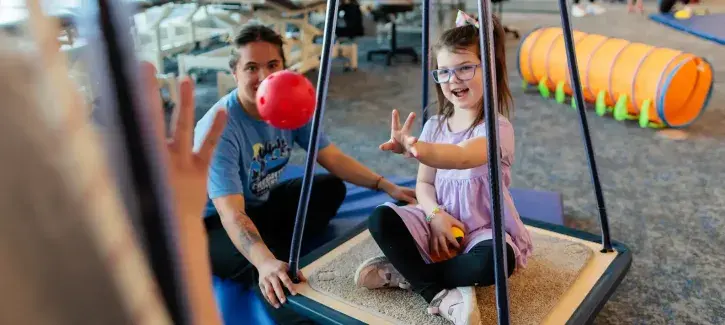
OT practitioners aim to assist clients in performing their daily tasks or occupations to the greatest of their abilities. Pediatric occupational therapists strive to help children gain independence by working to strengthen the development of fine motor, sensory, and visual motor skills they need to function and socialize.
A child’s occupations, Greiner explains, are very different to those of an adult. Their job is to play, learn, and interact with other children — to be a child, yes, but also to be a sibling and classmate. “Depending on what the child’s limitations might be, those occupations can be really challenging,” she says.
Pediatric occupational therapists evaluate the developmental appropriateness of each child’s current skills related to:
- Play and social interactions
- School performance and academic environments
- Daily activities and routines
These OT assessments help inform the adjustments needed to enable children to perform the daily activities they might otherwise find challenging. “We assess fine and gross motor skills, sensory processing, emotional regulation, visual motor integration and more,” Greiner says.
She emphasizes that in pediatric OT, it’s essential to focus on a child’s abilities rather than highlighting what they can’t do. “When I teach occupational therapy students about this, we talk about a strengths-based approach,” Greiner explains. “Rather than accommodating for a deficit, our purpose is to facilitate adjustments based on a child’s skills and needs. How can we adjust the world around them to meet what they can do?”
Greiner notes that pediatric occupational therapy centers on fostering ongoing skill development rather than rehabilitating lost abilities, particularly for children with diverse neurological and physical needs.
Some common goals addressed by pediatric OT include the following:
- Improving motor skills
- Learning self-care skills, such as bathing, brushing teeth, and feeding themselves
- Maintaining positive behaviors in all environments
- Strengthening attention and social skills
- Developing increased balance, strength, and reflex integration
Pediatric occupational therapists primarily work in outpatient and school environments, though some are employed at in-patient facilities. “Early intervention is another setting pediatric occupational therapists work in,” Greiner adds. “This is intended to take place in the home or natural environment so that therapists can coach the parents and caregivers on things to do with their child’s skill development every day.”
When should a child visit a pediatric occupational therapist?
In some cases, a child will have already received a diagnosis by the time they begin working with a pediatric occupational therapist. But, in others, OT assessments can help determine a pediatrician’s next steps. While OT is not a diagnosing profession, occupational therapists can contribute to the greater healthcare team’s diagnosing process.
“When a child is referred to an occupational therapist, often it’s because the parent or pediatrician notices a developmental difference with the child compared to other kids their age,” Greiner explains. “This sometimes presents as fine and gross motor skills. Other times it might be behavior-related skills, difficulty regulating emotions, or issues related to sensory processing.”
Children with the following conditions or challenges are at risk for developmental delays:
- Birth injuries/defects
- Sensory processing disorders
- Traumatic brain/spinal cord injuries
- Learning struggles
- Behavioral challenges
- Autism and other pervasive development disorders
- Cerebral Palsy and other chronic illnesses
- Down syndrome and other genetic conditions that affect a child’s body and brain
How do pediatric occupational therapists work with caregivers? The power of family-centered care
When it comes to OT for kids, collaboration with guardians and caregivers is an essential part of the process, from assessment to intervention.
“Parents and caregivers are the experts on their child. Their lived experience provides incredibly important insight into what treatment plan might be best,” Greiner says. She explains that understanding the caregiver’s goals for their child and learning what the child likes and what they’re good at, is just as important as discovering what might be going wrong.
By integrating the child’s and family’s unique stories, therapists offer practical occupational therapy education to support daily routines and help the child thrive alongside their peers, ultimately fostering better household flow and functioning as a family unit.
How you can make an impact as a pediatric occupational therapist
Pediatric occupational therapists empower children to build confidence, improve socialization and develop emotional resilience, fostering long-lasting self-esteem and a sense of accomplishment that ultimately benefits the entire family.
To pursue a rewarding career making a difference in children’s lives, explore educational opportunities at Creighton University’s Department of Occupational Therapy. Creighton also offers a specialized post-professional pediatric fellowship focusing on clinical practice and academia.