Stress First Aid Training
Stress First Aid Training: Prevent Burnout, Support Recovery, Build Resilient Teams
Creighton University's Stress First Aid training prepares individuals, healthcare professionals, first responders, educators, and community members to recognize early warning signs of stress injury and intervene before burnout occurs. This evidence-based peer support model—originally developed for military personnel and now adapted for civilian workplaces—gives you proven tools to help colleagues navigate high-pressure situations and recover from traumatic stress.
- Military-Tested, Civilian-Adapted – Originally created for the U.S. Navy and Marine Corps, this framework has been successfully implemented by hospitals, emergency services, and organizations nationwide.
- Immediate Application – Walk away with practical assessment techniques and intervention strategies you can use immediately with team members showing signs of stress.
- Multiple Training Formats – Flexible, accessible training options tailored to meet the needs of individuals with demanding schedules.
- Monthly Virtual Booster Sessions - Provide opportunities to apply concepts, reinforcing and maximizing learning to sustain training benefits.
- Scenario-Based Learning – Build confidence through realistic case studies covering workplace stress, traumatic incidents, compassion fatigue, and crisis situations.
Ready to strengthen your team's resilience? Call 402.280.2534 to speak with a training coordinator.
Custom Training for Your Organization: Bring Stress First Aid directly to your team. We offer on-site and virtual group training tailored to your workplace needs. Email SaraBanzhaf@creighton.edu for a consultation.
Stress First Aid Program
Widespread organizational and societal changes resulting from the COVID-19 pandemic have made stress management knowledge and skills more important than ever. Using the Stress First Aid framework and model, you can learn how to identify stress reactions in yourself and others, reduce the risk for stress injury, and promote coping and resilience among individuals and groups in social, occupational, and academic settings.
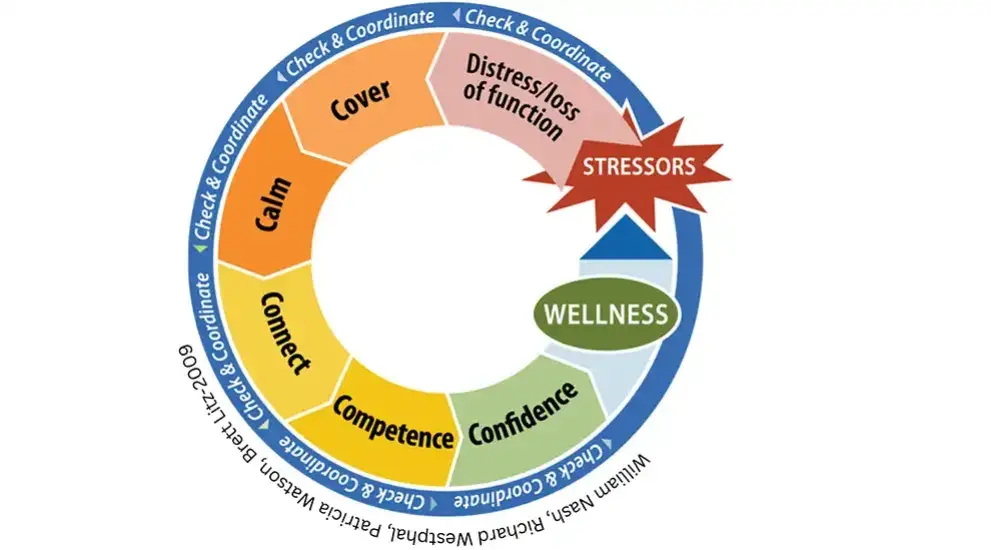
The overarching aim of Stress First Aid (SFA) is to identify and mitigate the negative impacts of stress before they impair health and well-being. SFA was initially developed under the auspices of the US military for implementation by the United States Navy and Marine Corps. It has since been successfully adapted for use by health care professionals and first responders across the country. The SFA model is based on five evidence-informed factors that help people recover from stress and adversity. These include the need for safety, calm, connection, sense of competence or self-efficacy, and hope.
What is SFA?
Stress First Aid is a peer support training designed to provide participants with a tool kit on how to perform a timely safety assessment and response when they suspect a co-worker or peer needs support. SFA trains peers to recognize and communicate about suspected psychological injuries with individuals with the goals of preserving lives, preventing further harm, and promoting recovery.