Interprofessional Education NEW
Better Care Through Collaboration
At Creighton, interprofessional education (IPE) prepares students to build the skills to work effectively with diverse healthcare teams in real-world settings, enabling them to deliver better care and patient experiences. Grounded in our Jesuit, Catholic values, our approach to IPE cultivates leaders who act as moral agents and transform healthcare by collaborating with one another. We’re leading in IPE and make our courses and tools available to educators, clinicians and students outside Creighton.
Our Interprofessional Campuses
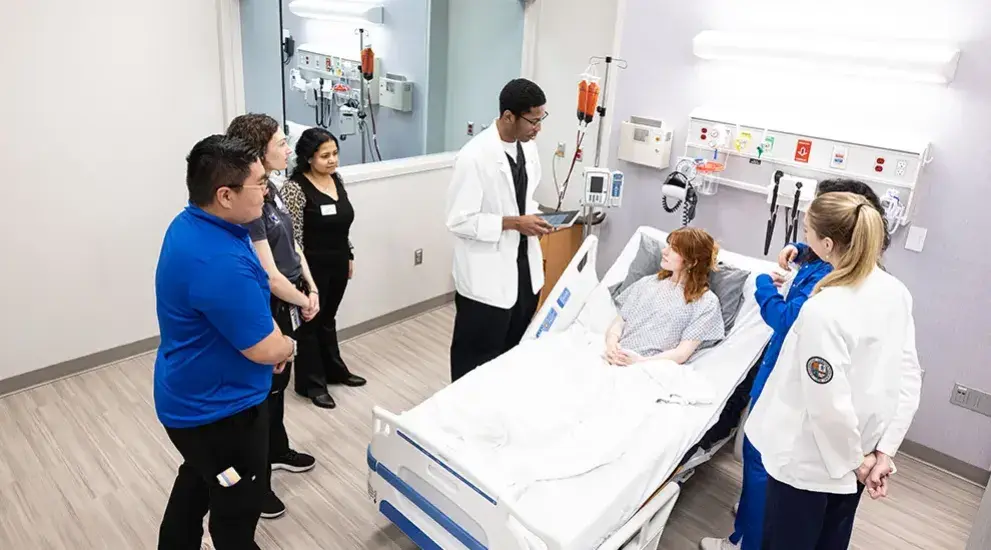
Creighton’s interprofessional education is shaped not only by curriculum, but also by the environments where students learn. By co-locating health sciences programs within shared facilities, students begin collaborating across disciplines from the earliest stages of training.
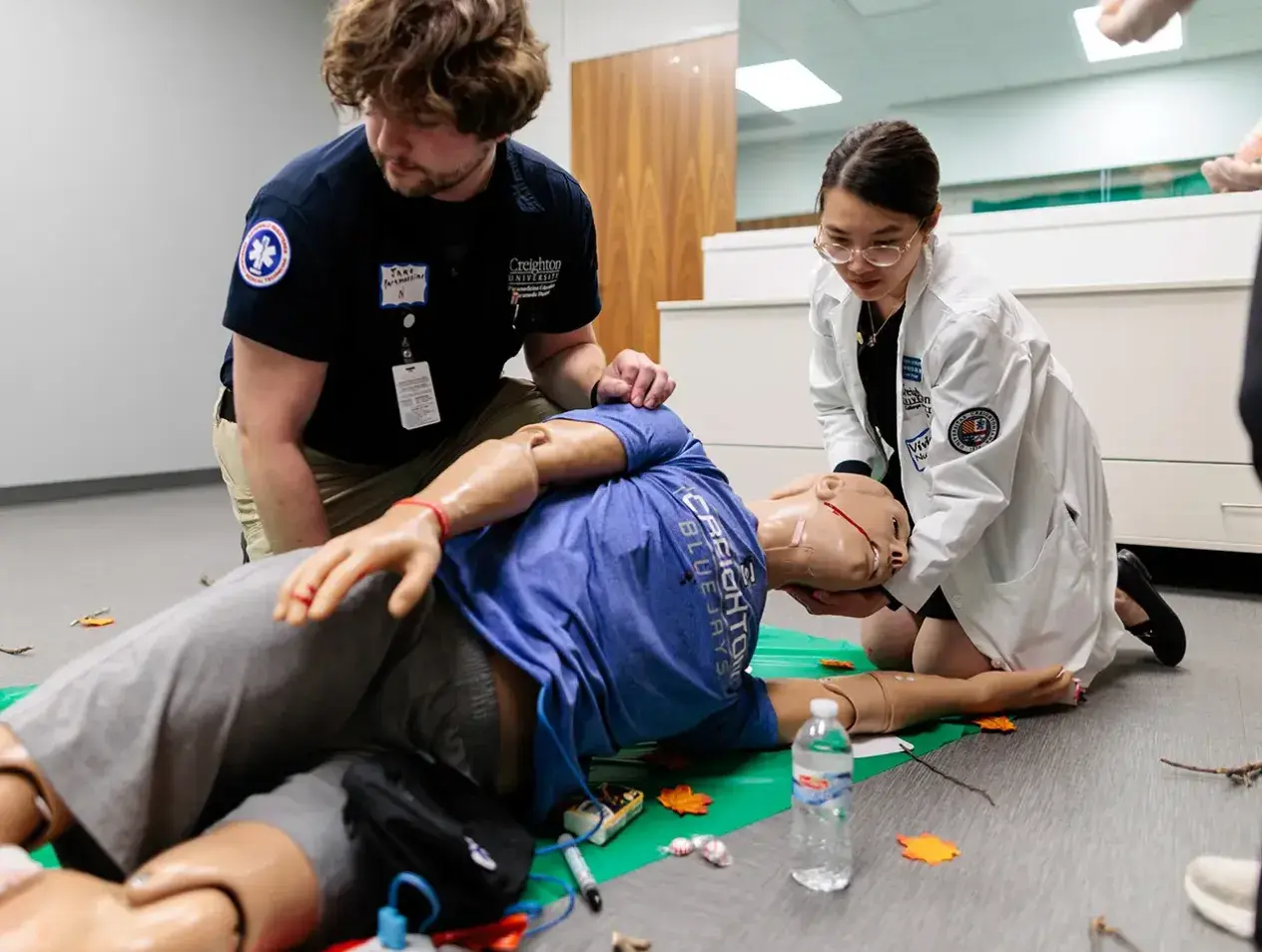
Both the CL and Rachel Werner Center for Health Sciences Education in Omaha and the Virginia G. Piper Charitable Trust Health Sciences Building in Phoenix feature classrooms and advanced simulation spaces designed for teamwork. These environments make collaboration part of daily academic life, from informal interactions to hands-on experiences like stroke simulations in Phoenix and emergency simulations in Omaha. Across both campuses, the Center for Interprofessional Education and Research (CIPER) powers Creighton’s approach to interprofessional education and collaborative practice.
Opportunities for IPE Abroad
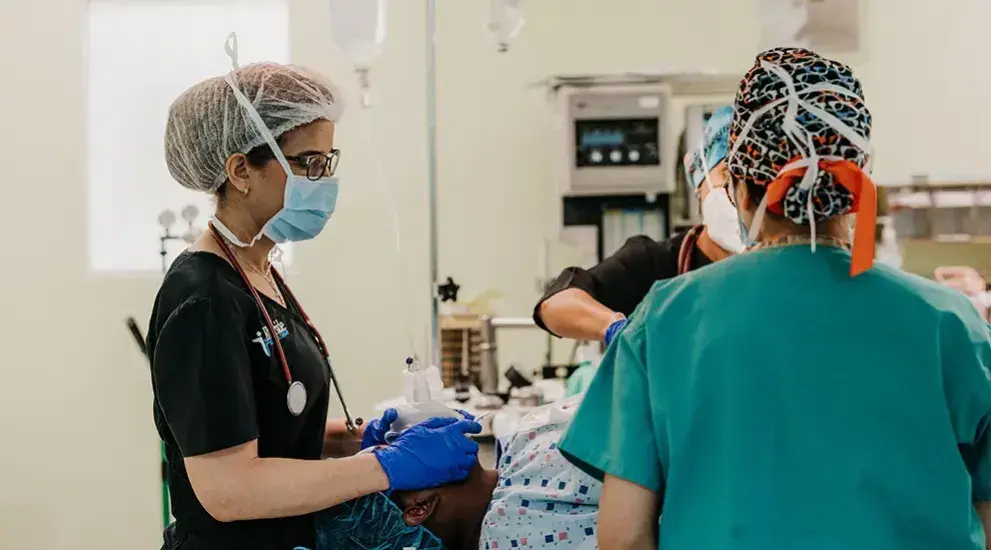
The Institute for Latin American Concern (ILAC) Summer Health Program offers students and healthcare professionals an immersive, interprofessional experience in the Dominican Republic. Participants live within rural campo communities while working together in clinical settings and engaging in health education focused on prevention and quality of life. Through the program, students learn to build relationships across cultural, linguistic and socioeconomic barriers while providing basic healthcare. The program occurs annually for three weeks in July and is open to students in the College of Nursing, School of Medicine (M2s and M4s), School of Dentistry, and School of Pharmacy and Health Professions. Other undergraduates and health science professionals are also welcome to apply.
Conducting Research Together
Our health sciences faculty and students are actively contributing to new knowledge in the field of interprofessional education. Recent projects highlighted below explore innovative approaches to collaborative learning and their impact on teamwork, communication and patient-centered care.
Interprofessional Simulation Incorporating Diverse and Vulnerable Populations
This project examined the impact of an interprofessional simulation that was designed to help students care for a vulnerable older adult with complex medical and psychiatric needs. Psychiatric mental health nurse practitioner students worked alongside learners from adult acute-care nurse practitioner, pharmacy and occupational therapy programs in a simulated clinical encounter with a standardized patient.
Through the simulation, students assessed physical and mental health needs, considered social determinants of health and developed an interprofessional treatment plan. Evaluation results demonstrated statistically significant improvements in students’ perceptions of interprofessional collaboration, as well as strong team performance. Qualitative feedback highlighted the value of the standardized patient interaction and the opportunity to practice collaborative decision-making in a realistic care setting.
Exploring New Drug Candidates to Restore Sensory Hair Cells in the Ear
In recently published research, Creighton faculty and students worked collaboratively to investigate a novel approach to addressing sensorineural hearing loss, a type of permanent hearing impairment caused by the loss of sensory hair cells in the inner ear, which mammals typically cannot regenerate. In this interprofessional research effort, led by Sonia Rocha-Sanchez, MS, PhD, MBA, a professor at the Creighton University School of Dentistry, researchers tested new derivatives of a quinoxaline compound to determine whether they can stimulate supporting cells in the auditory system to potentially give rise to new sensory hair cells. The study showed that two lead quinoxaline analogs promoted measurable supporting cell proliferation and generation of sensory hair cells in both zebrafish and mouse models without harming existing cells, suggesting these compounds might one day contribute to therapies aimed at regenerating auditory tissues.
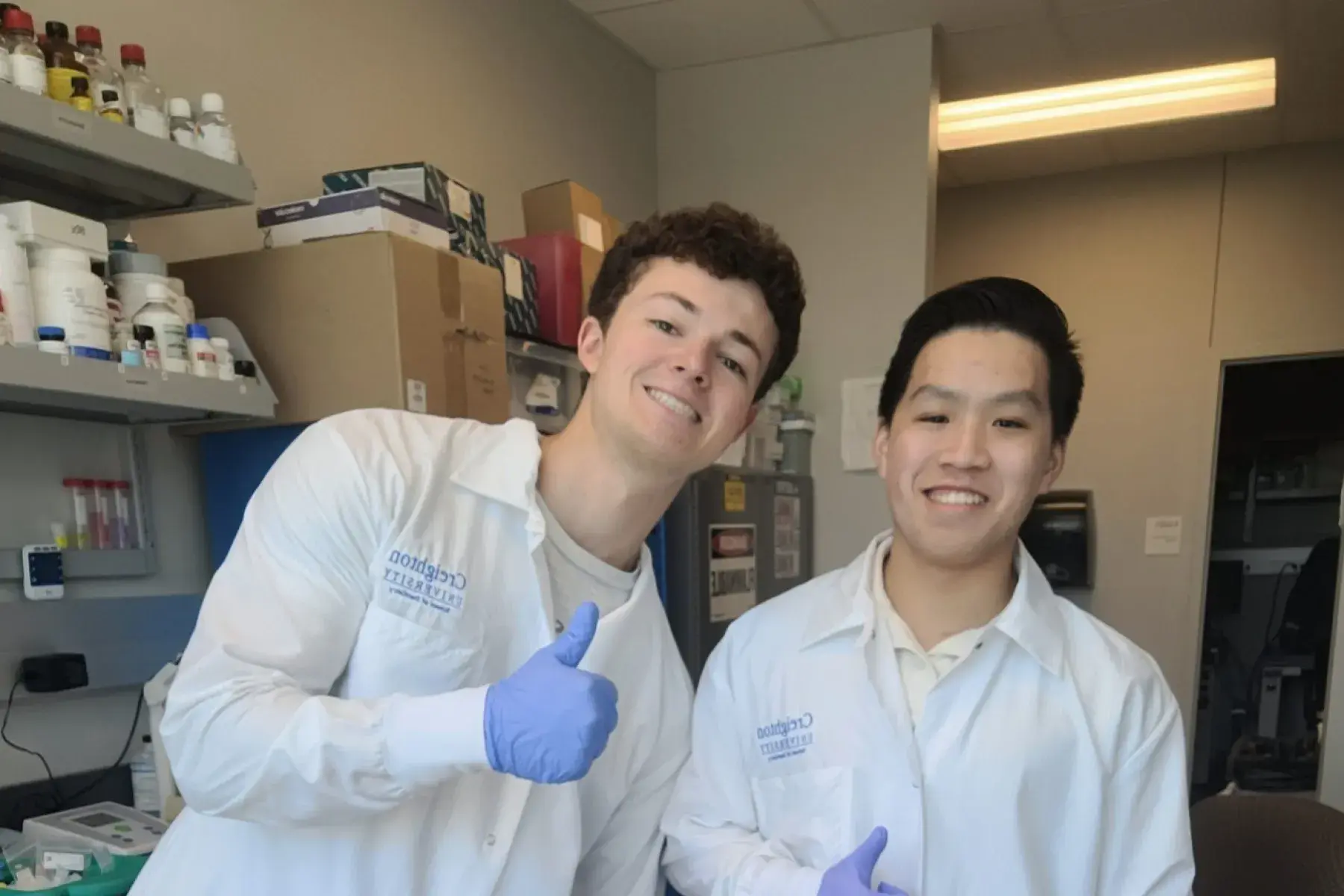
Creighton students Kenneth Nguyen, a second-year dental student, and Brock Barthol, a first-year medical student, contributed to the research. By bringing together pharmacy, dentistry and broader biomedical sciences perspectives, the team is pushing toward new regenerative strategies for hearing loss.
“This project showed me how closely dentistry, medicine and research intersect. There’s a real impact when we collaborate across disciplines.”
Kenneth Nguyen, School of Dentistry, Class of 2028