CREW for Health Justice for Medical Students
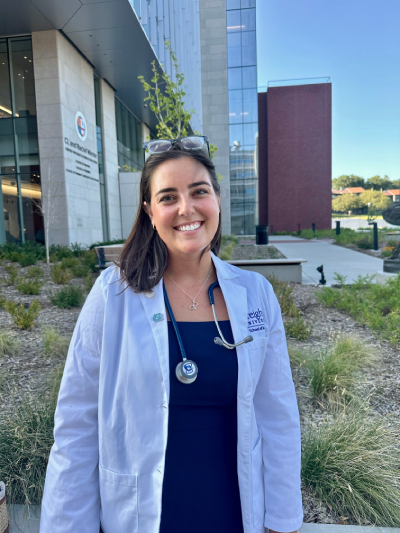
Nicole Welch, Creighton’s School of Medicine Class of 2028, experienced a growing interest in serving disadvantaged and underserved populations during her first two years of medical school at Creighton, and it became her extracurricular focus.
“I have never felt as strongly influenced by an organization's mission and values as I have by Creighton's,” Welch says.
Knowing Welch’s role as research chair for her class and her extracurricular focus, a peer introduced her to the work of the University’s Institute for Population Health (IPH).
Over the summer months, Sarah King, program manager with the IPH, led conversations with a small group of medical students including Welch, Lindsey Klaess, now a third-year med student, and Becca Huju, title, of the Schlegel Center for Service and Justice, on how to best meaningfully incorporate interested students in the work of population health. The discussions led to the creation of a specialized subgroup in the SCSJ, the Community Reflection Education Weekly (CREW) for Health Justice for medical students.
“I was excited by the opportunity to help create something that would not only deepen my own understanding,” Welch said, “but also give other medical students space to learn, reflect, and consider how they can contribute to health justice.”
Restructuring the IPH Research Interest Group
These conversations led King and Welch to envision a restructured IPH Health Equity Research Interest Group (RIG). This restructuring evolved into pairing the RIG with CREW for Health Justice sessions, creating more opportunities for students to engage in meaningful dialogue about health equity and the social factors that influence health.
Welch and the King collected feedback from medical students on topics related to social determinants of health and adapting CREW Health Justice, a program originally developed and led by SCSJ for undergraduate students, for medical students.
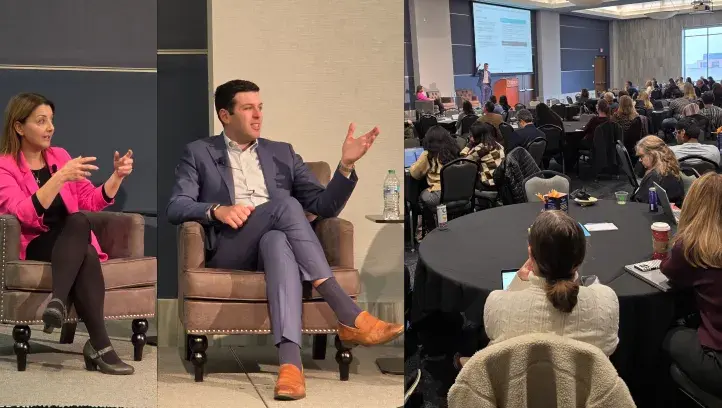
Centered on personal reflection, community building and collaborative learning, this pilot program developed into three-part series exploring a timely and critical health issue in depth: “Housing Instability as a Determinant of Health.” Over three 90-minute CREW sessions and two, to date, broader monthly RIG meetings involving faculty and staff, participants have focused on understanding the impact of systemic healthcare disparities, how those disparities intersect with broader social issues and the actionable roles that providers and Creighton University can play in advancing health justice with a focus on housing instability.
“I am grateful that this experience has aligned with the start of my clinical rotations because I have become much more attuned to the social barriers patients may face and the different ways providers respond to them,” she said. “It has also reinforced for me that what matters most to patients may not always be the medical care itself, but whether we recognize and address their broader needs. A treatment plan can only go so far if a patient is struggling with food insecurity, transportation, housing instability, or other barriers that affect their ability to follow through with that plan.
“My hope is that CREW serves as a safe space for students to honestly reflect on their own perspectives, recognize where they have room to grow, and think critically about their roles as future physicians,” she said. “I think the earlier medical students engage in caring for the whole person, whether through reflection in CREW for Health Justice, participating in IPH projects, volunteering in the community, or learning during clinical rotations, the more naturally this becomes a priority in their future practice.
“Ultimately, I want to be a physician who recognizes these barriers and takes an active role in helping patients navigate them, whether independently or in partnership with others who are already doing this important work.”
CREW for Health Justice, and specifically this iteration focused on housing instability as a determinant of health, provides students with an intimate setting to engage more deeply in these conversations, with an emphasis on learning from and reflecting alongside community members and people working in this space.