Different paths, one purpose: Meet two members of Creighton's MD Class of 2030
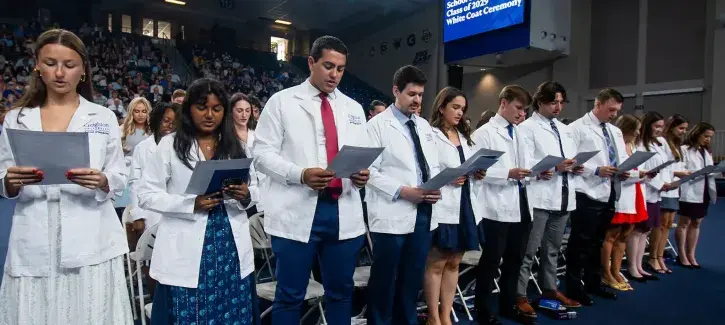
Every white coat tells a different story
For 251 members of the Creighton University School of Medicine Class of 2030, the White Coat Ceremony marks the beginning of medical school and a lifelong commitment to caring for others.
Representing 30 states, the incoming class brings a wide range of experiences to Creighton. Some arrive after years of research, others after careers in healthcare or service. Some have overcome personal challenges that ultimately shaped the physicians they hope to become.
For Keith Abbey and Juan Moran Hernandez, the journey to medicine followed very different paths. Yet both were drawn to Creighton by a shared belief that great physicians care for the whole person.
Keith Abbey brings a personal perspective to medicine
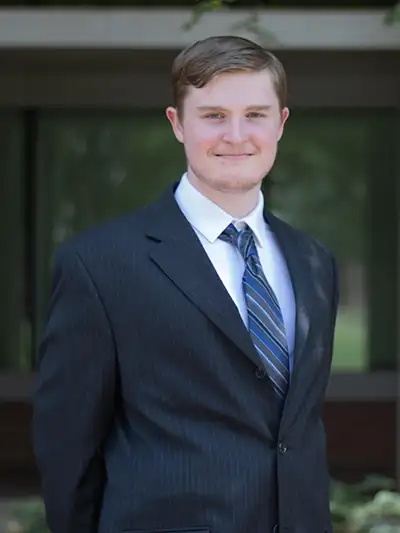
Keith Abbey has lived with hearing loss for nearly his entire life.
At age 5, he put on his first pair of hearing aids and suddenly heard sounds he had never experienced before, from birds singing outside to the hum of an air conditioner.
That moment sparked a lifelong curiosity.
"The biggest driving factor for me to pursue a career in medicine is my own experience with hearing loss from a young age," Abbey said.
After earning a degree in biomedical engineering from North Carolina State University and the University of North Carolina at Chapel Hill, Abbey spent three years at the National Institutes of Health researching genetic therapies that could provide additional options for families navigating hereditary hearing loss. As an Intramural Research Training Awardee in the National Institute on Deafness and Other Communication Disorders, he combined laboratory research with clinical volunteering and shadowing experiences, strengthening his desire to become a physician-scientist.
His research eventually introduced him to Peter Steyger, PhD, and the Dr. Richard J. Bellucci Translational Hearing Center at Creighton.
"As I applied to medical school, I met with current and former medical students and graduate students from Creighton, whose seemingly endless positive anecdotes about the program and Omaha helped convince me Creighton was the place to be," Abbey said.
Now beginning the University's MD/PhD program, Abbey hopes his personal experience will shape the care he provides throughout his career.
"My disability taught me from an early age that the human experience is incredibly diverse," he said. "Individualized care, therefore, can only be truly effective with dignity in the physician-patient relationship."
Juan Moran Hernandez found purpose through service
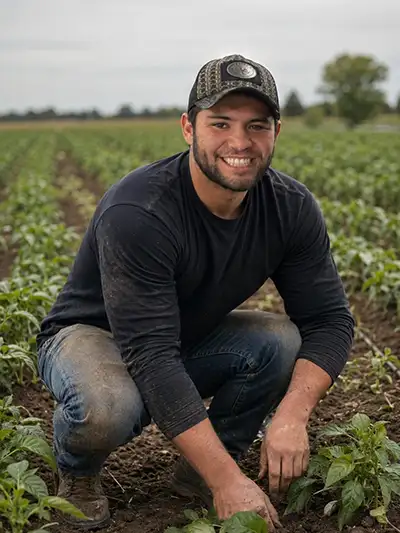
For Juan Moran Hernandez, medicine began long before he ever stepped into a classroom.
Growing up in rural Mexico, he witnessed his aunt suffer from an undiagnosed neurological condition while lacking the resources for proper medical care. At 6 years old, his family immigrated to California from Mexico, facing financial hardship and housing insecurity. As the oldest of three children, he spent much of his childhood helping support his family, working in California's tomato fields after school and on weekends while pursuing his education.
Those experiences changed how he understood healthcare.
"I pursue medicine because I want to become the physician I once wished my own community had," Moran Hernandez said. "Someone who understands the realities that shape health, respects the dignity of every person and works alongside communities to create a healthier future."
After completing community college and earning a bachelor's degree in chemistry from UCLA, Moran Hernandez spent two gap years gaining a deeper understanding of healthcare from multiple perspectives. He worked at a family medicine clinic learning the operational side of healthcare before becoming an educational counselor supporting military students navigating higher education.
As an Arrupe Global Scholar, Moran Hernandez participated in an immersion in the Dominican Republic, an experience that affirmed both his calling and his decision to attend Creighton.
"I wanted to be surrounded by people who saw medicine as a calling and were committed to using their gifts in service of others," Moran Hernandez said.
He found that community through Creighton's Jesuit mission and its emphasis on cura personalis, care for the whole person.
A shared commitment
Although Abbey and Moran Hernandez arrived at Creighton by different paths, both see medicine as more than diagnosing and treating disease.
For Abbey, it means listening carefully to every patient while advancing research that could improve lives for future generations.
For Moran Hernandez, it means advocating for patients whose circumstances often shape their health as much as any diagnosis.
As they begin medical school alongside 249 classmates across Omaha and Phoenix, they'll spend the next four years developing the knowledge, skills and compassion needed to care for patients while carrying forward the experiences that first inspired them to pursue medicine.