What to expect from a PharmD program
Pharmacy school prepares students to become experts who help patients use medications safely and effectively. But what does pharmacy school involve beyond learning about prescriptions and drug interactions?
A Doctor of Pharmacy (PharmD) program combines four years of foundational medical sciences, clinical coursework and hands-on experiences.
To learn more about the ins and outs of pharmacy school, we sought expert insight from Maryann Skrabal, PharmD, CDCES, director of the Office of Experiential Education (OEE) and professor at Creighton University’s Omaha campus. Join us as we break down the most important aspects of pharmacist schooling and explore the dedication, knowledge and lifelong commitment to learning needed to thrive in this career.
An overview of pharmacy school curriculum
Broadly speaking, pharmacy school curriculum can be broken into two categories: didactic learning (in the classroom) and experiential learning (i.e., laboratories, internships, job shadowing, clinical rotations and community service).
One thing Skrabal wishes more students understood is that “a Doctor of Pharmacy (PharmD) degree starts out with foundational medical sciences, and then it progressively becomes more clinical in nature.”
“Courses like human physiology and pathology,” she adds, “help you understand how the body is supposed to work so that you can tell when there is a disease in the body.”
A PharmD program typically takes four years to complete; it’s an intensive, full-time commitment. Beyond memorizing drug names, dosages and interactions, pharmacy students must master many transferable skills.
“You need competencies like communication, adaptability, time management, curiosity, and resilience to get through pharmacy school,” Skrabal says. “Above all, having empathy — for yourself and for others — is key.”
Experiential learning during pharmacy school
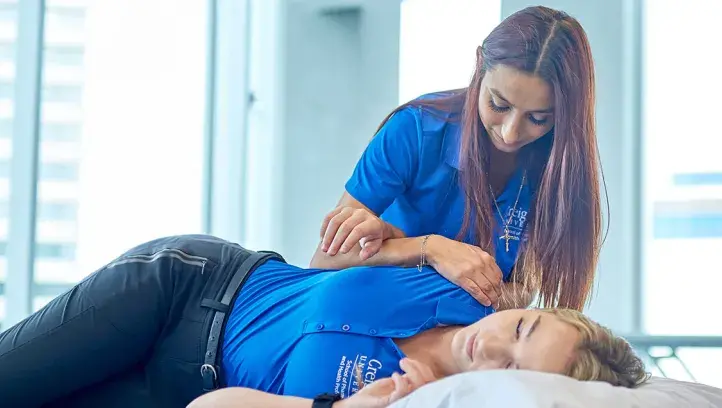
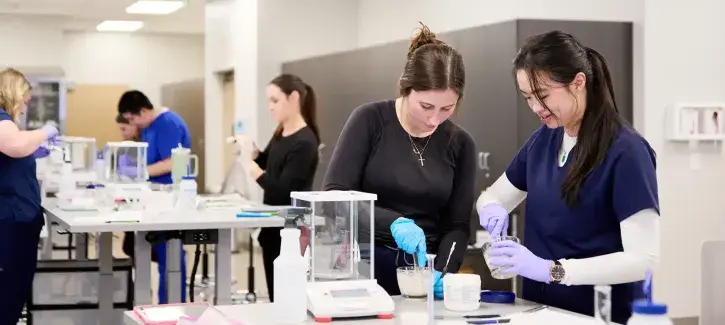
Hands-on experience is a cornerstone of pharmacist training. Under supervision by licensed pharmacy educators and practitioners, students get the opportunity to explore different specialties, refine their skills and apply classroom learning in tangible ways.
The first three years of pharmacy school include Introductory Pharmacy Practice Experiences (IPPEs). These prepare students for their fourth and final year of clinical rotations — a phase of training called Advanced Pharmacy Practice Experiences (APPEs).
During year one, for example, students in Creighton University’s PharmD program begin intentionally investigating different types of pharmacy careers. This involves shadowing pharmacists in community, hospital, clinic, and other settings.
“At the end of each semester, we have students reflect on their experiences individually and in groups to define what they learned, what they liked and didn’t like,” Skrabal explains. “This is part of our Ignatian values that define education at Creighton.”
Additionally, students can choose from more than 30 varieties of elective and specialty rotations. While far from an exhaustive list, possibilities include the following:
- Clinical specialties like cardiology, critical care, acute care, ambulatory care, infectious disease, emergency medicine, pediatrics, neonatal intensive care, psychiatry, oncology, organ transplants and neurology
- Community pharmacy and ambulatory and outpatient clinics
- Hospital pharmacy and inpatient medicine
- Pharmaceutical industry and research to learn about drug development
- Pharmacy management
Creighton’s Experiential Education Office database includes more than 1,000 pharmacy practice sites across all 50 U.S. states, plus an APPE opportunity in the Dominican Republic with the Institute for Latin American Concern (ILAC).
PharmD degree: Breakdown by year
The Creighton PharmD program equips students with the knowledge, skills, and values they need to be successful in a pharmacy career. This is clearly represented in the Doctor of Pharmacy curriculum, which was designed so that each year of learning builds upon the one before it.
Take a look:
Pharmacy school first-year curriculum
- Introduction to Collaborative Care
- Calculations in Pharmacy Practice Biochemistry
- Professional Development & Experience I & II
- Medical Terminology
- Pharmaceutics I & II
- Communication Skills
- Dispensing & Patient Care I
- Human Physiology
- Microbiology & Immunology
- Health Systems & Patient Safety
- Basic Pharmacokinetics
- Pharmacy-Based Immunization Delivery
- P1 IPPE: Six, 4-hour shadow visits at a community pharmacy, hospital pharmacy, and four electives
Pharmacy school second-year curriculum
- Pharmacology I & II
- Patient Assessment
- Chemical Basis of Drug Action I & II
- Pharmacotherapeutics I & II
- Dispensing & Patient Care II
- Professional Development & Experience III
- P2 IPPE: 3-week Community Introductory Pharmacy Practice Experience (summer between P1 & P2 year)
Pharmacy school third-year curriculum
- Pharmacotherapeutics III & IV
- Intro to Research Methods/Biostats
- Foundations of Public Health
- Immunopharmacology & Biotechnology
- Pharmacy Practice Management
- Professional Development & Experience IV
- Pharmacy Practice Law
- Ethics
- Literature Evaluation
- Dispensing & Patient Care III
- P3 IPPEs: 3-week Hospital Introductory Pharmacy Practice Experience (summer between P2 & P3 year) and 4-day Clinical Introductory Pharmacy Practice Experience (spring P3 year)
Pharmacy school fourth-year curriculum
- Delivering Medication Therapy Management (MTM)
- P4 APPEs: Eight 5-week rotations
- 5 Required: Community, hospital, acute care, ambulatory care, and drug information or MTM
- 3 Electives of your choice
“Our ultimate goal is to prepare students to be medication therapy experts who work on interprofessional teams and provide compassionate, ethical and patient-centered care,” Skrabal affirms.
Pharmacy licensure requirements and exams
Another element of pharmacist schooling is preparing students to pass the rigorous and comprehensive exams required for practice. All states require pharmacists to be licensed in order to practice. The specifics vary by state, so it’s important to check the licensing board requirements for the area in which you plan to practice.
To be eligible for licensure, you must first complete a PharmD program that is accredited by the Accreditation Council for Pharmacy Education (ACPE). After earning your degree, there are two main exams that PharmD students must take and pass:
- North American Pharmacist Licensure Exam (NAPLEX): This test is required in all states and evaluates clinical and pharmaceutical knowledge.
- The Multistate Pharmacy Jurisprudence Exam (MPJE): This or a similar state-specific test is required in all states and tests a graduate’s comprehension of pharmacy law and ethics.
These exams help ensure that all pharmacists are sufficiently trained to care for patients and adhere to all legal and ethical guidelines. Skrabal confirms that Creighton PharmD students are reminded “from day 1, but especially during the third and fourth year” that they need to have a study plan in place for these important exams.
Start your pharmacy school journey
Through rigorous coursework and hands-on clinical experiences, pharmacy school helps students develop the knowledge and skills to provide patient-centered care across a range of practice settings. Whether your interests lie in clinical care, community pharmacy, research or other specialties, a Doctor of Pharmacy degree opens the door to a rewarding career helping others live healthier lives.