

Student Stories
Jays and their Journeys
If you’ve ever wondered what Creighton students think about their study abroad experiences, you’ve come to the right place. This collection of stories highlights memorable moments, lessons learned and other reflections from study abroad programs around the world. Stories are written by members of the Creighton Study Abroad team, peer ambassadors, current students and alumni.
Allison’s Experience in Spain
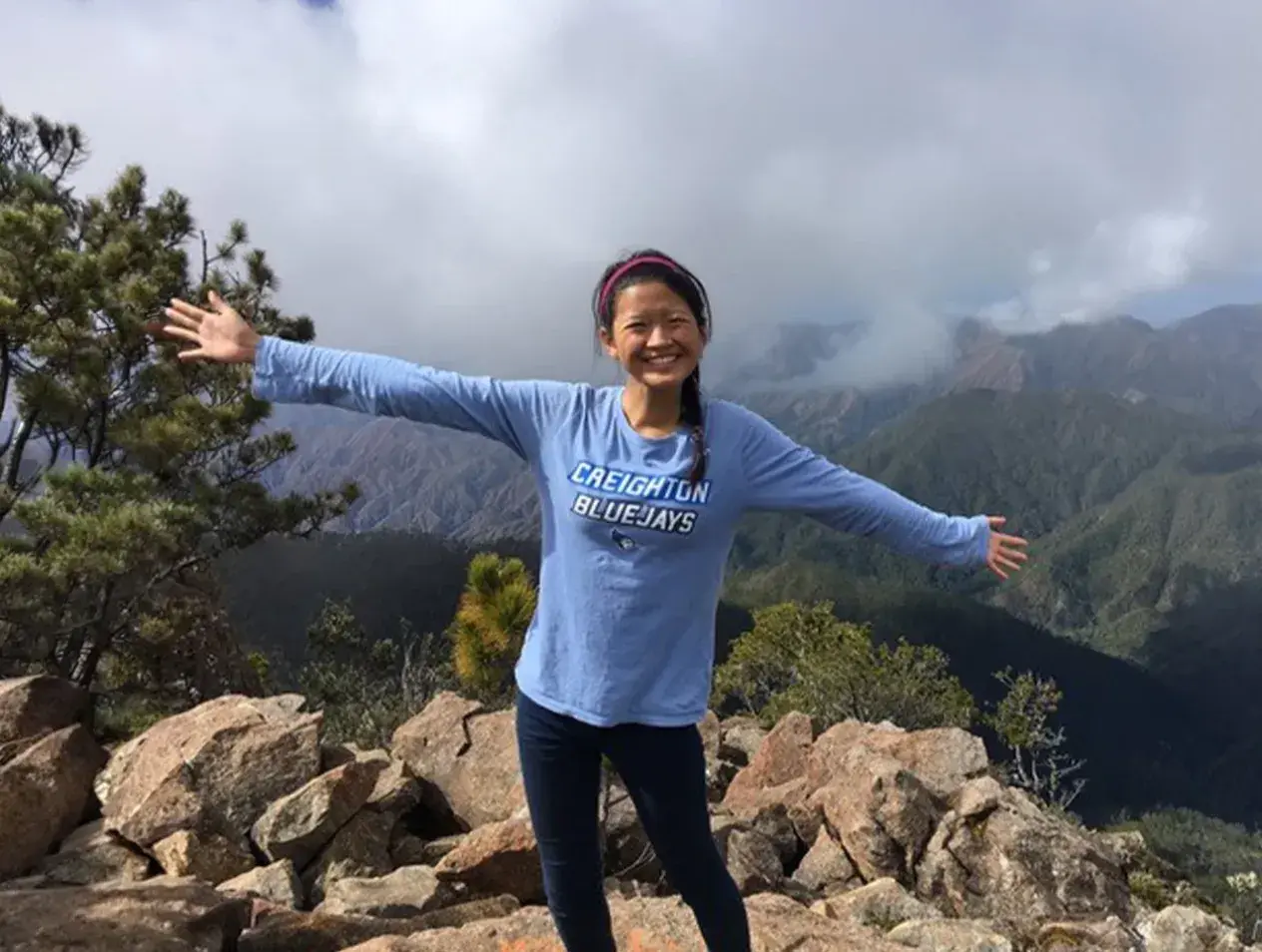
Taking all her classes in Spanish, living with a host family, surfing, trying delicious ‘pintxos’ and even teaching Spanish to individuals who immigrated, Allison fully immersed herself in the culture of Bilbao, Spain.
“For people who are considering studying abroad, just do it! When else in your life are you going to get the chance to live in a foreign country and immerse yourself in a different culture?”

Ecuador Trip Guides Career Path
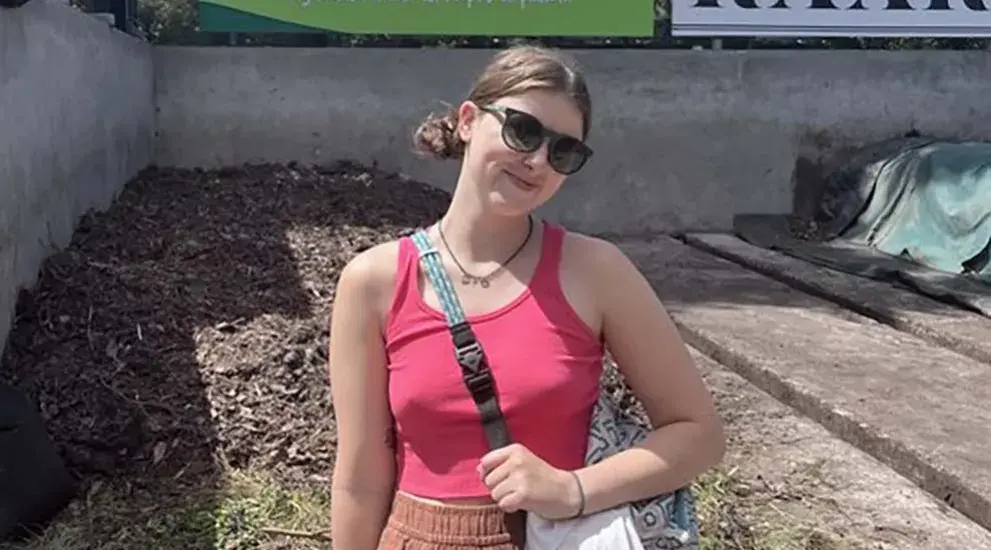
A trip to Quito, Ecuador, and to Ecuador’s Yasuni National Park, showed St. Louis native Clara Hasemeier that the effort to boost sustainability is underway worldwide. The Creighton sustainability major says a study trip to the South America nation introduced her to a new culture and new people. It also reinforced her belief that her goals are within reach as she works toward a career in sustainability.
More Student Stories
Seeing Health Through a New Lens: My Time Abroad in Austria and Hungary
RyAnn
When I first signed up for the FLPA program, I expected to learn about many of the different healthcare systems, but I didn’t expect how much this experience would challenge me to think about health, justice, and dignity in new ways.
One of the most eye-opening stops was Curhaus in Bad Kreuzen, Austria, where the “five pillars” of health are put into practice/treatments, they are plant therapy, hydrotherapy, exercise, nutrition, and a balanced lifestyle. At first, I thought these treatments felt outdated compared to the high-tech healthcare I’m used to in the U.S., but the more I reflected, the more I realized how much we miss out on preventative care and holistic approaches at home. Wellness, I learned, isn’t just about curing disease, rather it is about supporting the whole person mentally, emotionally, physically, and socially.
Another topic that I found myself reflecting on was how dignity and trust help shape the care that we give. At the elderly care facility in Moedling, Austria, the doors and medicine cabinets were left unlocked, patients were grouped by their conditions, and the environment felt calm and personal. It was strikingly different from the sterile, high security feeling I’ve seen in many U.S. facilities. Here, trust wasn’t just an idea, it was built into their system.
Our visit to a refugee house was one of the most moving parts of the trip. Meeting individuals who fled war only to face policies that gave them just six euros a day for food and even reduced that allowance if they received outside meals, was difficult to process. It reminded me that while aid can meet basic needs, it can also unintentionally strip away independence and dignity from the population. Seeing this firsthand made “equity” feel real, not just theoretical.
Not all lessons were about gaps in healthcare; we were also able to see innovation at work. In an EMS training program, virtual and mixed reality tools were used to prepare trainees for different high-stress scenarios. What stuck with me was how much emphasis was placed not just on technical skills, but on the mental and emotional well-being for the providers. It made me realize that justice in healthcare isn’t just about the patients being treated, but it’s also about supporting those who provide care.
This program showed me that promoting social justice in public health means looking at the system as a whole, how people are treated, how professionals are trained, and who gets access to the care. My time in Austria and Hungary helped me see health through a broader lens, one that prioritizes dignity, prevention, and humanity.
A Summer of Serving in the Dominican Republic
Elianna
This past summer, I spent roughly a month in the Dominican Republic serving a rural community through a health clinic. It was hot, dusty, and full of bugs, with long clinic days and unfamiliar things all around; but it was one of the best experiences I’ve ever had. When we left our Campo, it truly felt like I was leaving a new home.
The community gave me so much more than I could have ever given to them. I learned how to slow down and live in the moment again. My host mom, Hilda, taught me the beauty of an afternoon Cafecito and showed me genuine love and care despite the language and cultural barrier. When I didn’t understand the Spanish being spoken, my host dad, Ventura, would always encourage me and calmly say “todal bien mija” (everything’s fine honey). I remember listening to Hilda tell us about their family and culture while teaching us how to mash and fry plantains in her kitchen. Their patience and love for my roommates and I made us immediately feel welcome in their home.
Not only were our host parents welcoming, but our community in general was filled with such generosity; they were always cooking and providing food for us, involving us in community activities like dominos or softball, and teaching us new Dominican slang. Our time off consisted of swimming at local rivers and laughing with the locals. We would eat mangos and passionfruit as we waded down the river or walked along the trails, having competitions to see which seed would go down the stream fastest. We played with tiny crabs in the rocks and did front flips into the deeper areas of the water to see who could make the biggest splash. We rode on the back of trucks (with permission from our Coordinators) and dodged little branches as we drove through the forest areas, seeing gorgeous views of the mountains. It was so loud it felt like our ear drums would burst, but we didn’t care.
Working with other students and professionals to provide care for my community revitalized my passion for my profession and for how I want to live my life. Clinic days were hectic, full of learning, teamwork, and countless opportunities to build connections with the other students I came with. We learned how to rely on others for their skills and be confident in ourselves. We provided care for our community and others close by and were often able to see the impact of that care. Every clinic day we walked away wishing we could have done or given more but were so fulfilled by what we were able to do.
The culture-shock coming back home was strong, but I’m glad it was. This experience will always be with me through my personal and professional development.
An Immersive South Korean Experience: Culture, Food, And K-Pop!
Natasha
Are you a student with a desire to experience life in a city and explore the South Korean culture? Then, the Creighton in South Korea program may be a great fit for you!
Sogang University is a Jesuit institution partnered with Creighton that is located in the beautiful city of Seoul, South Korea. It offers a unique experience for students interested in learning about a new culture, trying delicious food, and utilizing some of the best public transportation in the world; all while furthering your education at Sogang University. To highlight her experiences in Seoul and give advice to students considering a semester in South Korea, Creighton student Natasha agreed to share all about her semester abroad! Natasha is a sophomore at Creighton, studying biochemistry, on the pre-dental track. She went abroad during the Fall of 2022. A majority of the courses Natasha enrolled in were Magis CORE, and elective credit.
We began our conversation by talking about how she initially became interested in South Korea.
“I think I’ve known I’ve wanted to go to South Korea for a while. It was a combination of a couple factors. One, I had a lot of Korean friends in high school who got me pretty interested in what it’s like in South Korea and they weren’t afraid to share everything about it. [Two] I got really invested in K-Pop…I [also] knew I wanted to go to Asia because my dad is from Thailand. I knew Creighton didn’t have a program to Thailand, and I knew the most about South Korea, so I wanted to go there.”
Attending a Jesuit institution abroad provided a similar experience to that of Creighton’s. She mentioned one great experience she had was with one of her teachers who was a Jesuit Priest.
“He taught a Methods and Religious studies seminar that I took, and I would honestly say that’s the most interesting class I’ve taken outside my major…like my entire time in college because he was really open about it…[and] it wasn’t theology based at all, so it was really nice to take a religious class that focused on looking about what religion is and not just “Here’s our religion. Learn it”.
Detailing the course structure, Natasha mentioned she only had class three days a week. The course structure was primarily based on a midterm and a final exam, which allowed her time to explore the city as she spend less time on weekly homework. She said that one of her favorite parts of living in this fast-paced city was the transportation. She mentioned that unlike Omaha, you don’t need a car to get around the city, which allowed her to easily travel to different places.
“I took a five-day, day trip to Busan which is the southeastern beach area of South Korea. I also took a day trip to Nami Island in the fall which has these really pretty leaves…it was just really nice to enjoy nature after being in the city for a while and that was [only] an hour or two away. Yeah, so kudos to them for having good transportation!”
Upon arriving in Seoul there was a learning curve for her that she felt was important to mention.
“A lot of people know a decent bit of English, but Korean is still a very different language, and everybody uses it. Most people don’t talk it [English]. I knew some people who came there knowing Korean, but it took a little time just getting used to Korean as their main form of communication. And for me I only knew the alphabet just a little, so I could read it but not understand it very well. I did take a Korean language class while I was there, and that improved my skills a lot! It really helped me in getting comfortable because by the end of the semester I was able to order food in Korean…even hold a basic conversation!
You are going to a foreign country, and you can’t expect them to speak English for you, so it would be nicer if you at least tried to speak their language. I know anytime I tried to speak Korean, the locals appreciated that you’re taking the time to learn.”
Living in Seoul and being a major K-Pop fan, Natasha got to go to K-Pop concerts which had a cutthroat registration process.
I went to three K-Pop concerts while I was there. Let me tell you, the tickets for some of those big groups are “life or death” you know. They sell out in two minutes! I went to a PC café because they have the really good setups and you just sit there, have the time on the screen, and you have to wait. You have your credit card information ready and it’s really fast, so I luckily got a back row ticket for an Ateez concert. It was a little stressful, but the concert was so worth it.
I concluded the interview by asking Natasha if she had any advice for students wanting to participate in this experience. Her tips were centered around preparation before you arrive to Seoul and included listing the places you want to go, establishing a good budget, and trying to learn Korean beforehand, if possible. She also said that once students arrive in South Korea, they should try to explore as much as possible and be open to new things.
“Don’t be afraid to go out and do stuff. I’m kind of shy sometimes and it’s kind of scary to go out, meet people, and try new things. At least for the international students, we all in the same boat and we are all there to go to different places and meet new people, so you might as well go with random people and make new friends. We had a giant group chat of all the international students and sometimes somebody would be like “Does anybody want to go do “xyz” with me?”. Saying “YEAH” was a really big step for me, but it paid off and I made really good friends while I was there.
Saying yes and going outside her comfort zone allowed her to meet people from all over the world and experience the fun exciting night life that South Korea has to offer, such as Karaoke! Her openness also gave her the opportunity to try the local food…which YUM!
“[The] food was amazing…and a lot of it’s mostly locally run. I know while I was there, I made a promise to myself to try all the Korean food even though I’m notorious for being a “little picky”. I tried it all and it was so good.”
Walking Through History: My Summer Studying Law in Germany
Camden
This summer, I had the amazing opportunity to spend a month in Europe. We visited Poland, the Netherlands, and Austria while living and studying in Nuremberg, Germany, through Creighton’s Nuremberg to the Hague Summer Program. It was a once-in-a-lifetime opportunity to learn about international law and the Holocaust in the city where the famous Nuremberg Trials took place after World War II.
The program focused on Holocaust history, international criminal law, human rights, and how the international justice system works. The program combined multiple forms of learning together in order to create the most impactful experience. Attending classes, participating in discussions, and visiting important historical and modern judicial sites all contributed to a holistic understanding of what we were studying.
Some of the most powerful moments for me were the visits to Auschwitz in Poland and the Anne Frank House in Amsterdam. These places were a window into the past and conveyed to me the magnitude of how the war completely flipped people’s lives upside down and the emotional impact this had and still has on Europe. They also provided educational opportunities I will never forget and instilled in me the importance of preserving this history so everyone has a chance to see these places and learn this history as I have.
In order to demonstrate the past and present aspects of international law, we visited sites of historical and modern legal significance. The International Criminal Court in The Hague was my favorite. It was amazing to hear from lawyers who continue to work towards international justice while sitting where legal history had been made. These experiences took what we were learning in the classroom and contextualized it to fit into the context of real life. Real cases on current issues within international law allowed me to understand how the ideas from the Nuremberg Trials still shape international justice now. What stood out most to me was how the program connected the past and the present. It showed me how the law can be used to fight for justice, not just in history books, but in real situations happening around the world today.
Outside of class, we also had plenty of time to enjoy the different cities we stopped at. Guided tours in Kraków, Salzburg, and Nuremberg allowed me to discover the picturesque cities while hearing their history from local tour guides. My favorite city, Nuremberg, had a beautiful old town with cobblestone streets, castles, great food, and a rich history from medieval folk tales to WWII battles. In Austria, we even went up the Alps to see Hitler’s Eagle's Nest, where he met with his advisors and hid from the Allied Powers. These trips added to my understanding of history as well as broadened my experience as a student studying abroad in different countries.
After this trip, I came home with a new understanding of the history of WWII in Europe and the legacy it left across the continent. I also gained new perspectives on international law and a stronger sense of why international justice matters. I'm so thankful to Creighton Law School and the professors who led the program, and to the many lawyers, historians, judges, and tour guides who spoke to us about their work and their home. Their dedication to students and passion for what they are teaching made this trip an unforgettable experience.
A Summer in Colombia: Everyone Has a Seat at the Table
Meredith
Much of my time in Colombia this past summer was spent talking, listening, and sitting at the dinner table, even hours after the plates have been cleared.
I often found myself in conversations that depicted events of the past in great detail. Having my “host parents”, Manuela and Narciso, share stories of how they arrived in Sincelejo and to the farm. How their family works hard, around the clock, to own what they have. I would hear stories of perseverance, love, fear, pain, loss, and triumph. Often times, there were smaller less profound conversations about pets and why I could eat white rice for the rest of my life. I would even receive relationship advice, warranted or not.
Many of these conversations, however, also centered around the goal of “constructing peace” and what are the possible steps to do that in current times. Although I would stumble over a word or translate it wrong in my head and be lost for the next couple minutes, I often understood the main claims and ideas that were being tossed around.
Anyone that has traveled to Latin America before knows how long these dinner table conversations can last. They go on for hours, playing a sort of “ping pong game” with words and ideas. It’s a general rule of thumb that everyone will stay forever at the table. However, something special about Colombia is how everyone will greet others when they enter into a room. Every single person, will shake every single hand, ask how you are and give you a kiss on the cheek. If your late, their late, and there are 25 other people in the room, everyone will be acknowledged.
This concept seemed to puzzle me and the other volunteers. Normally, if you’re late, you don’t acknowledge anyone, you find a spot in the corner and make yourself invisible. However, here, the complete opposite. You make your presence known; you make yourself known.
I was reminded of making your presence known. At every staff meeting and every small visit to the farm, everyone was known. Maybe not their name, or their entire backstory, or even the reason why they are there. But their voice. The bare minimum, just enough to be heard.
That being said, it’s here that remains the same metaphor for being heard. That there is a seat at the table. There is a space for you to sit and there is acknowledgement that you are there. It doesn’t mean that you will say something, and it doesn’t mean that you will be asked a question. It really just means that you are there. And that everyone has a seat at the table.
A Home Away from Home in Australia
Agoum
Are you interested in experiencing life at the University of Sydney, a large university with courses for almost all majors in a coastal city known for its vibrant way of life and idyllic destination? We talked with junior psychology student, Agoum, to understand more about her time there.
Part of the reason Agoum wanted to study abroad in Australia was because she had family near Sydney who were able to provide a good support system. She spoke highly of them and talked about what it was like to have them on her semester abroad.
It was so convenient. I had only been to Australia once prior to study abroad, but it was when I went with my mom, and we just stayed at her aunt’s house the entire time. We didn’t really get to explore, so to be on your own…[and] have your cousins there that know the city, it was great. It was just really, really convenient and they know Sydney, so they were able to help me out, such as how the train station works, what station you have to get off at, etc.
When she wasn’t traveling with her family, she was attending courses at the University of Sydney.
They have a tutorial for every class you take. I took four classes. I only had exams in three of my classes. I took a class, I think it was French 5, it was my favorite class, but it was also the hardest class I have ever taken in my life. I didn’t take a language placement exam. They just looked at my transcripts and just said “oh, well we think you’d be good for French 5”, and the entire class was in French…It was hard, but it was probably my favorite class. The professor was very understanding, she’s from France too, so that’s also what made it easier.
And while you, the reader, may not personally have family in Australia there are a number of ways to meet people starting with your roommates. The University of Sydney has the option for both same gender and mixed gender housing options. While Agoum was more comfortable with a same gender apartment, this is a very normalized practice that is popular for many students attending the university. Additionally, beyond her FIVE roommates that she was able to meet, she said that one of the best ways she met other people was through a Nature Club she joined!
“There was like this nature club, it wasn’t called a nature club, I cannot remember the specific name, but every week they would take students who were in the club to like different nature spots around Sydney, and if you were a student who could join at a discounted price…So that’s where I met a lot of people was through there. I think there would be like 10-15 people per trip, and you could just sign up. Most of the time you would see the same people.”
With the Australian grading system, she was given a lot of time to explore Sydney. And while she did say the transportation was clean and efficient, she took the time to walk and take everything in around her to meet locals.
“…they are very, very friendly like here in the Midwest you say “yeah people in the Midwest are friendly “but Australians are like extremely friendly. And I would also say my days were really simple I only had two classes a day and then I would go to the Australian Starbucks like all the way in downtown Sydney and just sit there for hours. It was also good because I got a lot of walking in.” People say it is a driving city, but I really don’t think it is. You can only drive so far in Sydney, and once you reach downtown, you’re stuck like you have to walk. So most people just walk or they take the train because the train is so convenient, but not a lot of people drive.
But yeah, the walking was really good for me to be able to be outside, that was one thing I loved…I went to get my ear piercing and there was a park I had to walk through to get to the piercing shop. I think it was called Hyde park, and ever since that first day…I went to that park almost every week. It was so nice, there was no playground so there were no kids, it was just a really nice park.
But fair warning, bring an umbrella when walking because as Agoum said:
“…it rains and when it rains it pours”.
We concluded the interview by discussing a few tips for life over there. As an island, this will be a more expensive place to live, so budget and budget well before heading over. Consider when you want to go as well because the seasons are flipped from the United States (i.e., our summer is their winter). But once you’re there?
“I would say like the time flies by so quickly I would really like take advantage of all the free time you have because there you only take maybe two classes a day and then like an hour or two hours depending on what class you’re taking so you have the rest of the day to do whatever. I would really take advantage of it especially because everything in Australia closes at 6pm. They really enjoy that work life balance, so get in there while you can because at 6 o’clock you won’t be able to do anything after that…”
As an American, I just thought I could go to Walmart at 10:30pm but everything closes at 5, 6 so manage your time well. But definitely explore. Sydney is so big and there are so many things to see there. Like now that I’m back I wish I would’ve seen this and seen that…and the Opera house is not that big. They make it look so big in pictures, but it’s beautiful inside like the shows were nice. I saw the Phantom of the Opera right before they ended it, very very nice.
Contact Us
Study Abroad Advisors
Phone: 402.280.2221
Fax: 402.280.2211
Office:
Creighton Hall
Global Engagement Office
Suite 324, Third Floor
