
Blood Pressure HubMaking Blood Pressure Monitoring More Accessible
Creighton at Highlander now offers a Blood Pressure Hub, funded by an American Heart Association grant. This blood pressure monitoring station is available to support community members in learning about and managing their cardiovascular health. The hub pairs self-monitoring tools with educational resources and referrals for care when necessary. Community members can access the station Monday-Friday from 9 a.m.-5 p.m. without an appointment, making it a low-barrier and accessible resource for ongoing blood pressure monitoring.
Child Safety CenterWorking with Families to Keep Kids Safe
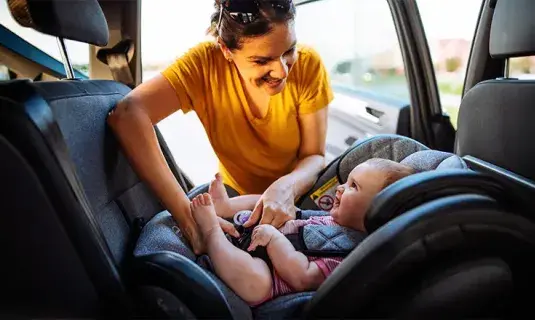
In 2025, the University's new Child Safety Center opened in Creighton's recently renovated space in the Highlander Accelerator, 2112 N. 30th St. In partnership with Children’s Nebraska Hospital and community organizations, the Center works to reduce accidental childhood injuries, the leading cause of death in children nationwide and in Nebraska. The CSC provides education through workshops and training and provides affordable safety resources, including bike helmets, home safety equipment, firearm locks, medication lock boxes and more.
Learn more about the launch of the CSC.
Community Advisory BoardShaping Programs Around Community Needs
The Community Advisory Board (CAB) plays a central role in guiding the IPH's community-driven approach and strengthening authentic partnerships in North Omaha. Comprised of community members and stakeholders, the CAB ensures that programs and initiatives remain responsive to local needs, priorities and lived experiences. To support focused collaboration and action, the CAB is organized into three working groups: Parent and Caregiver, Youth and Advocacy and Community Engagement—each advancing targeted strategies that enhance outreach, inform programming and deepen trust between IPH and the community.
Creighton Community CollaborativeAdvancing Health Equity Through Community Partnerships
The Creighton Community Collaborative (CCC) was established in partnership with Nebraska Medicaid managed care organizations (MCOs) to identify and fund community-based organizations (CBOs) and Creighton-led initiatives that address healthcare access barriers, and reduce unmet health related social needs. In its work under this model, the Creighton CCC team worked closely with CBOs to ensure that their funded programs generated measurable, evidence-based outcomes. As the funding landscape evolved, so has the collaborative. As a collaboration between the Institute for Population Health and the Department of Clinical Research and Public Health, the CCC continues to support community organizations working to reduce health disparities through meaningful, collaborative partnerships. It works through the IPH Community Engagement team, as well as the Core for Applied Research and Evaluation (CAREs unit). To learn more about the future of the CCC, reach out to the Institute’s senior administrator for community engagement and strategy, Emily Sutton.
Creighton & Community @ HighlanderPartnering for Community Wellbeing
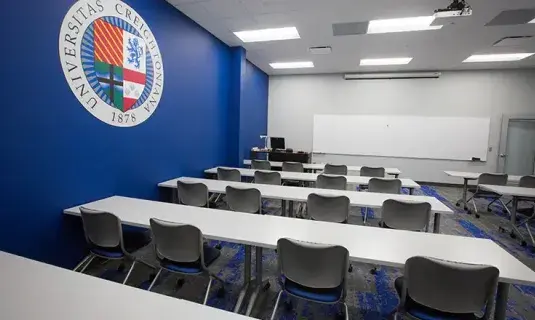
In 2025, community members, students and visitors witnessed a transformation of Creighton’s space at the Highlander Accelerator. The IPH’s Creighton & Community space is intended to bring Creighton and the North Omaha community together, and we encourage the public to utilize the space and its resources. This space will continue to be a home for the School of Law’s Juvenile Justice Clinic, the law school’s Community Connections program, the GED program run by the TRIO office and the Creighton Community Collaborative.
Health Navigator ProgramPersonalized Support for Health-Related Needs
The IPH launched the Creighton Highlander Community Health Navigator program in Spring 2026. This program aims to support North Omaha community members and families. The Navigator provides individualized assistance to address health related social needs, including referrals to healthcare, food access, housing resources, transportation and insurance navigation. By supporting caregivers, parents and community members, navigators reduce barriers to safety education and reinforce coordinated, family-centered support across Highlander programs.